

You planned to go for a walk in the evening. Then work ran late. You came home tired, had dinner, checked your phone for a while, and suddenly it was time for bed. You tell yourself, “I’ll walk tomorrow.”
For many people, this happens more often than they realise. There may be no obvious problem today, but over time, fewer walks can mean less movement, more hours of sitting and fewer opportunities for your heart and body to stay active.
The good news is that taking care of your heart does not always have to begin with a demanding workout. Something as simple as a regular walk can be a meaningful part of a heart-healthy lifestyle. When walking for heart health becomes a part of your routine, it can help improve fitness, maintain healthy blood pressure and blood sugar levels, assist with weight management, and lower your cardiovascular risk.
Why is Walking Good for Your Heart?
Think about when you walk quickly. Your heart rate goes up, your breathing gets faster and your muscles require more oxygen. The more you work out , the more your heart and lungs get used to providing your body with what it needs .
This is one reason walking and heart health are closely linked. Regular walking can improve cardiovascular fitness and support several factors that influence your risk of heart disease.
It also helps counter something that has become common in modern life: prolonged sitting. Eight or ten hours at a desk, followed by commuting, television or screen time, can leave very little room for movement even if you consider yourself “busy” throughout the day.
Walking gives you a simple way to change that pattern.
What Are the Benefits of Walking for the Heart?
The benefits of walking for the heart are not limited to improving stamina. Regular physical activity can contribute to better overall cardiovascular health by helping to:
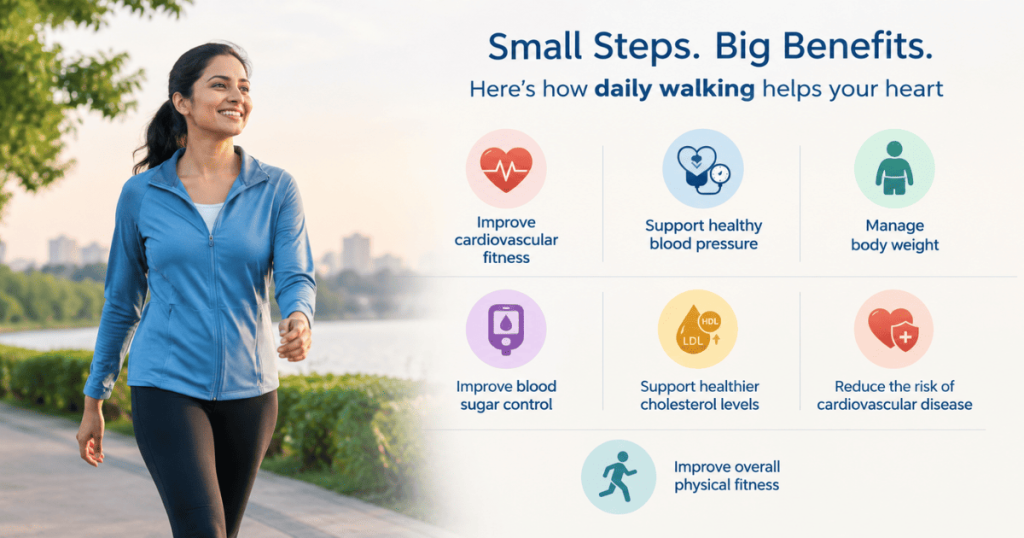
The amount of benefit depends on how often, how long and how intensely you walk, as well as your overall health. The important thing is to make movement a regular part of your routine rather than treating exercise as something you do only when you have extra time.
Are You Moving Less Than You Think?
One of the challenges with physical inactivity is that it can happen quietly.
You may go to work, attend meetings, finish household tasks and still spend most of the day sitting. A busy schedule can therefore give the impression that you have been active when your body has actually had very little sustained movement.
Your need to pay attention to physical activity and heart health becomes even more important if you also have risk factors such as:
- High blood pressure
- Diabetes or high blood sugar
- High cholesterol
- Overweight or obesity
- A family history of heart disease
- Smoking or tobacco use
- Increasing age
- Long periods of sitting every day
Having these risk factors does not mean that heart disease is unavoidable. It means that lifestyle changes and appropriate medical care become more important.
What Symptoms Should You Watch for While Walking?
Walking should not be used to test how much discomfort you can tolerate.
If you develop chest pain, pressure or tightness, unusual breathlessness, dizziness, fainting, sudden palpitations or unexplained excessive sweating while walking, stop exercising and seek medical advice.
Pain or discomfort that spreads towards the arm, shoulder, back, neck or jaw can also be a warning sign that should not be ignored.
If symptoms are sudden, severe or persistent, seek emergency medical care rather than trying to finish your walk.
When Should You Talk to a Doctor Before Starting Exercise?
For many people, gradually becoming more active is appropriate. However, if you have an existing heart condition or significant risk factors, it is worth discussing your exercise plans with your doctor.
Medical guidance may be particularly important if you have known heart disease, uncontrolled blood pressure, significant breathing problems, unexplained chest discomfort or have recently undergone a cardiac procedure or experienced a cardiac event.
Your doctor can consider your medical history, medications and current fitness level and advise you about the type and intensity of exercise that is appropriate for you.
Do You Really Need 10,000 Steps Every Day?
Not necessarily.
The number 10,000 may appear on fitness trackers and health apps, but heart health is not determined by one magic step count.
If you currently do very little activity, trying to suddenly reach a high daily target may make exercise difficult to maintain. Instead, start from where you are.
A short walk is better than remaining seated all day. As your fitness improves, you can slowly increase the duration or pace.
For most adults, health guidelines recommends150–300 minutes of moderate-intensity aerobic physical activity a week, plus muscle-strengthening activities at least two days a week, according to health guidelines.
How Can You Make Walking Part of Your Day?
The easiest way to walk more is not necessarily to find an extra hour in your schedule. It is to look for opportunities that are already there.
You could:
- Take a short walking break after sitting for a long period.
- Walk short distances instead of taking a vehicle when practical.
- Take the stairs when appropriate.
- Go for a short walk after a meal.
- Walk while talking on the phone.
- Set a regular time for a walk, either morning or evening.
- Increase your walking pace or duration.
Start out comfortably and build up, especially if you have been inactive for a long time, don’t push yourself too hard on the first day.
Can Walking Replace Heart Health Check-Ups?
No.
Walking is an important part of prevention, but it cannot tell you whether your blood pressure, cholesterol or blood sugar is within a healthy range.
Some cardiovascular risk factors can exist without noticeable symptoms. Regular health checks can help identify these problems early and allow appropriate lifestyle changes or treatment when needed.
Depending on your age, medical history and risk factors, your doctor may recommend monitoring blood pressure, blood sugar, cholesterol and your overall cardiovascular risk.
In other words, daily exercise for heart health should work alongside—not instead of—regular medical care.
What If You Already Have Heart Disease?
Having heart disease does not automatically mean that you should avoid physical activity. In fact, appropriately planned exercise may be an important part of cardiovascular recovery and long-term management.
However, your exercise routine should be based on your individual condition. A cardiologist may recommend a specific level of activity, supervised exercise or cardiac rehabilitation depending on your health.
If you experience chest discomfort, unusual breathlessness, dizziness or other concerning symptoms during a walk, do not try to push through them simply to complete your daily target. Get medical advice.
Don’t Wait for the “Right Time” to Start Moving
There will always be a reason to postpone a walk, work, traffic, fatigue, family responsibilities or simply not feeling motivated.
But you do not need a perfect exercise routine to start taking better care of your heart.
Start with what is realistic for you. Walk regularly. Break up long periods of sitting. Build up your activity gradually as you get fitter. And if you have heart symptoms or risk factors, talk to a doctor about your level of activity.
Walking and heart health go hand in hand, but the real benefit comes from making movement a habit rather than an occasional effort.
Your next walk does not have to be a big workout. It just has to happen.