
A blood cancer diagnosis can leave patients and their families with more questions than answers.
- What happens next?
- Will chemotherapy be needed?
- Is there any other way of treating it?
- What if the cancer returns?
Such questions are quite natural, and it is important to note that blood cancer treatment now goes beyond chemotherapy. For different types of blood cancer and for every individual patient, doctors might consider using doctors now use targeted drugs, immunotherapy, stem cell transplantation, and CAR-T cell therapy.
Just because there are more treatments available doesn’t mean that the latest one is automatically the best. The right treatment depends on the cancer type and its features. It also considers how the cancer responds to therapy, prior treatments, and the patient’s overall health. To put it simply, doctors should personalize blood cancer treatment to each individual. The disease type alone is not enough to guide care.
For both patients and their families, knowing what to expect can help make the process of receiving treatment a bit less stressful. This Blood Cancer Awareness Month, let’s examine the seven key points that patients and families should know regarding current blood cancer care.
1. Recognise the early signs of blood cancer
The symptoms of blood cancer can differ a great deal according to the type and stage of the disease and, in some cases, symptoms may also appear with common infections or other non-cancerous conditions, so the presence of one symptom does not mean that a person has cancer.
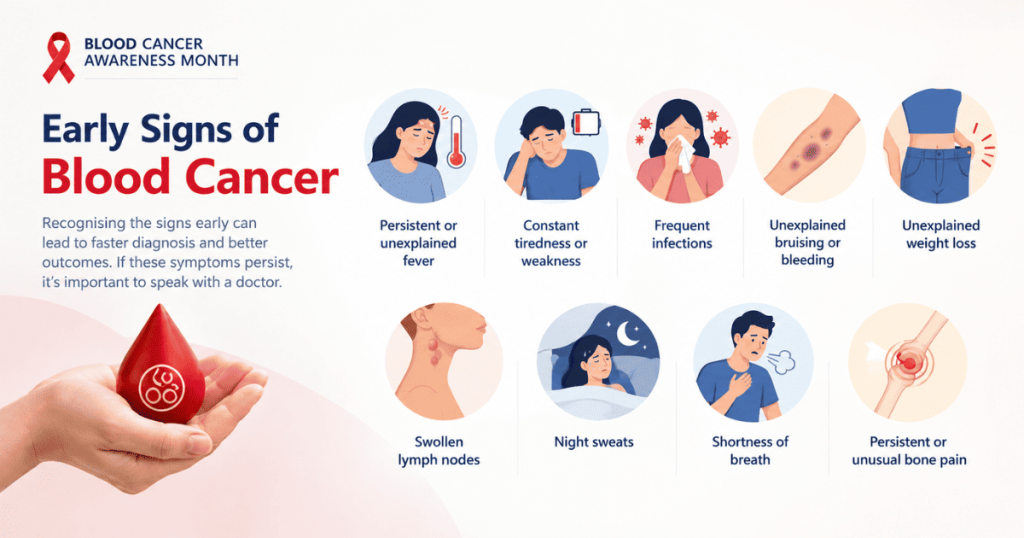
For instance, the symptoms of leukemia can be caused by abnormal blood cells displacing the healthy blood cells. Lymphoma symptoms include painless swollen lymph nodes, fever, and night sweats. Unexpected weight loss is also common. With multiple myeloma the symptoms may be bone pain, weakness, frequent infections, and abnormal bleeding or bruising.
2. Realise that blood cancer has different types
It is important to understand the diagnosis since the treatment relies greatly on the specific type and features of the cancer.
Leukemia
Leukemia usually starts in blood-producing tissues such as the bone marrow, where abnormal blood cells develop. It can be acute, which means that it advances quickly, or chronic, which means that it progresses more slowly.
Lymphoma
Lymphoma arises from lymphocytes, a type of white blood cell in the immune system. It comprises both Hodgkin lymphoma and non-Hodgkin lymphoma.
Multiple Myeloma
Multiple myeloma develops from abnormal plasma cells in the bone marrow. These abnormal cells disrupt normal blood cell production and weaken the bones.
Since these diseases are different, patients ought not to compare their diagnosis or treatment directly with that of another person.
3. It is not always clear what the causes and risk factors of blood cancer are
For the majority of blood cancers there is no one particular cause and the causes and risk factors for blood cancer will differ depending on the specific type of the disease.
Certain factors raise a person’s risk of developing blood cancer. These include advanced age and previous chemotherapy or radiation. Genetic disorders, immune-system conditions, and certain environmental exposures also increase risk.
However, there are a great many people who have been diagnosed with blood cancer and who have no identifiable risk factor. Patients should not assume their lifestyle choices caused the disease. Many people with blood cancer have no identifiable risk factor.
4. You need more than one test to make a diagnosis
No single blood test confirms all types of blood cancer. Doctors combine medical history, physical examination, and blood tests. In some cases they also use imaging studies, bone marrow testing, or lymph node sampling.
The tests depend on the suspected condition. They may include a full blood count, flow cytometry, and genetic tests. Imaging scans, lymph node biopsy, or bone marrow examination may also be required.
Doctors do not routinely recommend screening for most blood cancers as there are established screening programmes for some other types of cancer. Rather, doctors look into persistent symptoms, abnormal test results, or particular risk factors.
Persistent symptoms or abnormal blood counts need specialist attention. Consult a hemato-oncologist to ensure the right tests are done. Accurate diagnosis is essential before any treatment begins.
5. The treatment of blood cancer in modern times is highly individualised
Blood cancer treatment depends on several factors. These include the cancer type, genetic features, and disease stage. Prior treatments, overall health, and response to therapy also guide decisions.
Depending on the diagnosis, treatment may include:
- Chemotherapy
- Targeted therapy
- Immunotherapy
- Radiation therapy in selected situations
- Stem cell transplant or bone marrow transplant
- CAR-T cell therapy for eligible patients
Supportive treatment to manage infections, anemia, bleeding, or other complications
Some blood cancers need treatment right away. Others grow slowly and doctors monitor them carefully first. Treatment begins only when the condition requires it.
A specialist team coordinates every aspect of care. This includes diagnosis, treatment planning, transplantation, and infection management. Supportive care and follow-up are tailored to each patient’s needs.
6. What constitutes CAR-T cell therapy?
CAR-T cell therapy is a highly advanced type of personalized immunotherapy which is used in the case of certain blood cancers.
Doctors collect T cells, a type of immune cell from the patient’s blood. In a specialist laboratory, scientists modify the cells to identify specific targets on cancer cells. The cells are then multiplied and given back to the patient, where they can go on to attack the cancer cells.
CAR-T therapy isn’t appropriate for all patients who have blood cancer. Eligibility depends on multiple factors. These include the blood cancer type, previous treatments, and current disease status. General health and whether the cancer has the right target also matter.
It may also lead to serious side effects, such as cytokine release syndrome and neurological complications in certain patients; because of this, patients receiving CAR-T therapy need specialist evaluation, close monitoring, and supportive care.
CAR-T therapy now offers an important option for patients whose blood cancer has relapsed. It also helps those whose cancers are resistant to earlier treatment.
7. The quality of early medical care and the need for follow-up by specialists are important
Preventing blood cancer is not always possible. However, good general health habits make a real difference. Avoid tobacco, stay physically active, and eat a balanced diet. Keep up with vaccinations and attend all medical appointments.
Most important of all, persistent symptoms must not be ignored. Anyone experiencing unexplained bruising, frequent infections, or persistent fever should see a doctor. Unusual bleeding, weight loss, or ongoing bone pain also need medical evaluation. This is especially important if symptoms last or occur together.
Because of advances in treatment, the fact that someone has blood cancer does not mean that there are no treatments available to them. Treatment options depend on the specific disease. These may include chemotherapy, targeted drugs, immunotherapy, or transplantation. Cellular therapies and clinical trials are also available for eligible patients.
Each type of blood cancer requires a tailored approach. Diagnosis and treatment plans differ significantly from one type to another. Noticing symptoms early and getting an accurate diagnosis is essential. Seeing a qualified blood cancer specialist helps patients understand their options and access the right care.
If you or a family member has persistent symptoms or a blood cancer diagnosis, consult a hemato-oncology team. They will identify the most suitable treatment options for your specific situation.
At Omega Hospitals a multidisciplinary team consisting of hemato-oncology specialists and other healthcare professionals collaborates on assessing each patient’s condition and on drawing up an appropriate treatment plan. The treatment will be chemotherapy, targeted therapy, immunotherapy, stem cell transplantation or advanced cellular therapies such as CAR-T cell therapy, depending on the diagnosis and the individual needs.
Early diagnosis leads to better outcomes. If you or a family member is experiencing unexplained fatigue, frequent infections, unusual bruising, or swollen lymph nodes — do not wait.
Consult with a Specialist at Omega Hospitals
FAQs
1. What are the early signs and symptoms of blood cancer?
Unusual tiredness, frequent infections, unexplained fever, easy bruising or bleeding, weight loss, and swollen lymph nodes can be some warning signs. These symptoms can also occur with other conditions, so proper evaluation is important.
2. Is blood cancer curable?
Yes, many types of blood cancer can be treated successfully, and some can be cured completely.
3. What causes blood cancer?
In most cases, there isn’t one clear cause. Changes in the blood-forming cells can happen due to a combination of genetic and environmental factors, and sometimes they occur without any known reason.
4. Is blood cancer hereditary?
Most blood cancers are not directly inherited from parents. Having a family history may increase the risk in some cases, but it does not mean a person will definitely develop blood cancer.
5. What are the treatment options for blood cancer?
Treatment depends on the type and stage of blood cancer. It may include chemotherapy, targeted therapy, immunotherapy, radiation therapy, stem cell or bone marrow transplant, or a combination of these.