

Frozen shoulder affects between 2% and 5% of the general population, but that figure climbs sharply for certain groups. Among people with diabetes, prevalence ranges from 11% to as high as 76%, according to a 2025 narrative review. If you have been struggling with shoulder pain that gets worse instead of better, and movement feels more limited each week, frozen shoulder may be the reason.
What Is Frozen Shoulder?
Frozen shoulder, medically called adhesive capsulitis, happens when the tissue surrounding the shoulder joint thickens and tightens. This restricts movement and causes persistent shoulder joint pain. It typically develops gradually and moves through three distinct frozen shoulder stages.
| Stage | Duration | What Happens |
|---|---|---|
| Freezing | 6 weeks to 9 months | Shoulder pain increases, and range of motion gradually decreases. |
| Frozen | 4 to 12 months | Pain may ease slightly, but severe stiffness remains and limits shoulder movement. |
| Thawing | 12 to 42 months | Range of motion gradually returns as the shoulder slowly regains flexibility. |
Left completely untreated, frozen shoulder often improves on its own within two to three years. With the right treatment, most people see meaningful improvement far sooner
Frozen Shoulder Symptoms to Watch For
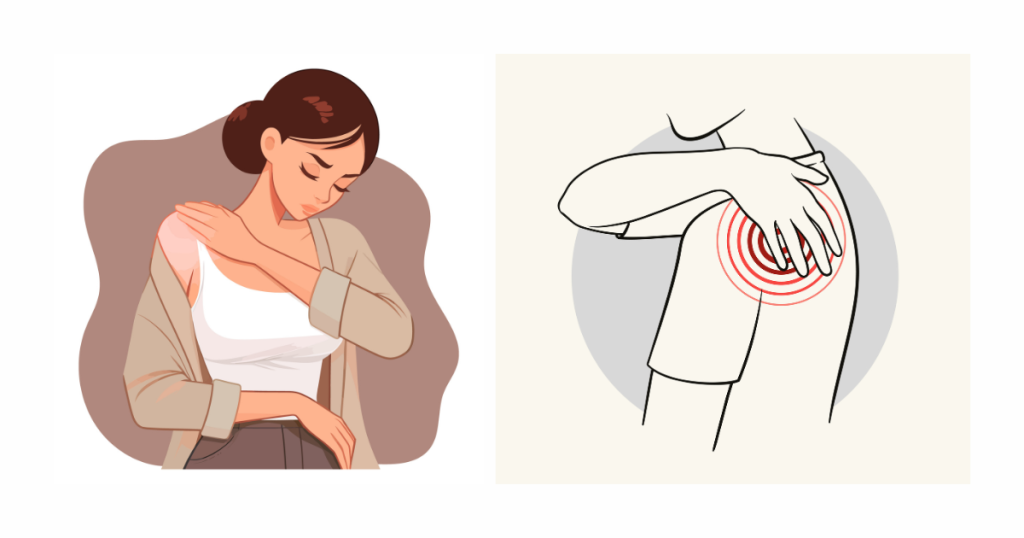
Recognizing frozen shoulder symptoms early makes a real difference in how quickly treatment works. One of the earliest and most telling signs is shoulder pain at night that disturbs sleep.
- Dull or aching shoulder pain, often worse at night
- Shoulder stiffness that limits reaching overhead, behind your back, or across your body
- Difficulty with everyday tasks such as dressing, driving, or sleeping on the affected side
- Pain that gradually worsens over weeks before stiffness sets in
- A noticeable reduction in range of motion compared to the other shoulder
Who Is Most at Risk? Frozen Shoulder Causes and Risk Factors
- Adults between the ages of 40 and 60
- Women more often than men
- People with diabetes, with risk rising significantly alongside blood sugar control
- People with thyroid disorders — thyroid and frozen shoulder are frequently associated — and anyone recovering from shoulder surgery or a period of prolonged shoulder immobility and shoulder stiffness
- Anyone recovering from shoulder surgery or a period of prolonged shoulder immobility is at elevated risk of developing frozen shoulder
Frozen Shoulder Treatment: What Actually Works
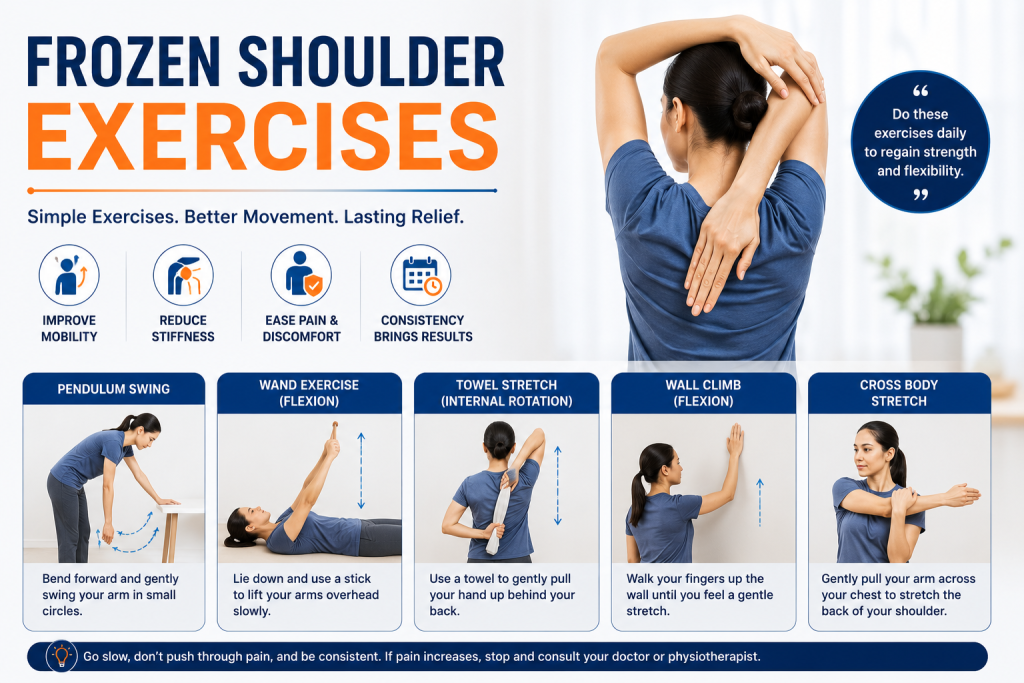
Most cases respond well to non-surgical treatment, and starting early prevents the stiffness from worsening.
Physiotherapy for Frozen Shoulder and Frozen Shoulder Exercises
Physiotherapy is the foundation of frozen shoulder treatment. A structured plan typically includes:
- Gentle stretching exercises to slowly restore the range of motion
- Hands-on shoulder mobilisation techniques performed by a physiotherapist
- Heat therapy before exercises to relax the shoulder
- A home exercise routine is often needed twice daily for lasting results
Consistency matters more than intensity. Studies show that supervised sessions combined with daily home stretching produce better outcomes than occasional treatment alone.
Shoulder Pain Treatment Options for Shoulder Pain Relief
- Oral anti-inflammatory medication to manage pain during the freezing stage
- Corticosteroid injections directly into the shoulder joint can meaningfully reduce pain and improve movement within weeks
- Hydrodilatation, a procedure using fluid to stretch the joint capsule, is used for more resistant cases
When Is Shoulder Arthroscopy or Surgery Considered?
Surgery is reserved for cases that do not respond to several months of physiotherapy and injections. The most common procedure, shoulder arthroscopy, releases tight tissue under anesthesia. Physiotherapy continues afterward to prevent the stiffness from returning.
How Long Does Frozen Shoulder Last?

This is the most common question people ask, and the honest answer depends on several factors. Frozen shoulder recovery time without treatment can mean the full cycle takes two to three years. With early physiotherapy and appropriate medical care, many people notice meaningful improvement within a few months, although complete recovery still generally takes several months to a year. Restoring full shoulder range of motion is the primary goal of any treatment plan.
People with well-managed diabetes and thyroid conditions tend to recover faster than those with poorly controlled blood sugar. Frozen shoulder in diabetics is particularly common — diabetes and frozen shoulder are closely linked, with prevalence in diabetic patients reaching as high as 76%. Managing these conditions alongside shoulder treatment is genuinely worthwhile.
What You Can Do Right Now
- See a doctor as soon as shoulder pain limits movement for more than a few weeks
- Start physiotherapy early rather than waiting for stiffness to worsen
- Stay consistent with home stretching exercises, even on days the shoulder feels better
- Keep diabetes or thyroid conditions well controlled, since this can speed up recovery
If you have ongoing chronic shoulder pain or stiffness, speak with our one of the best orthopedic specialist in Hyderabad or physiotherapist at Omega Hospitals. Early evaluation and a personalized treatment plan can shorten your frozen shoulder recovery time and help you regain full shoulder range of motion sooner.