
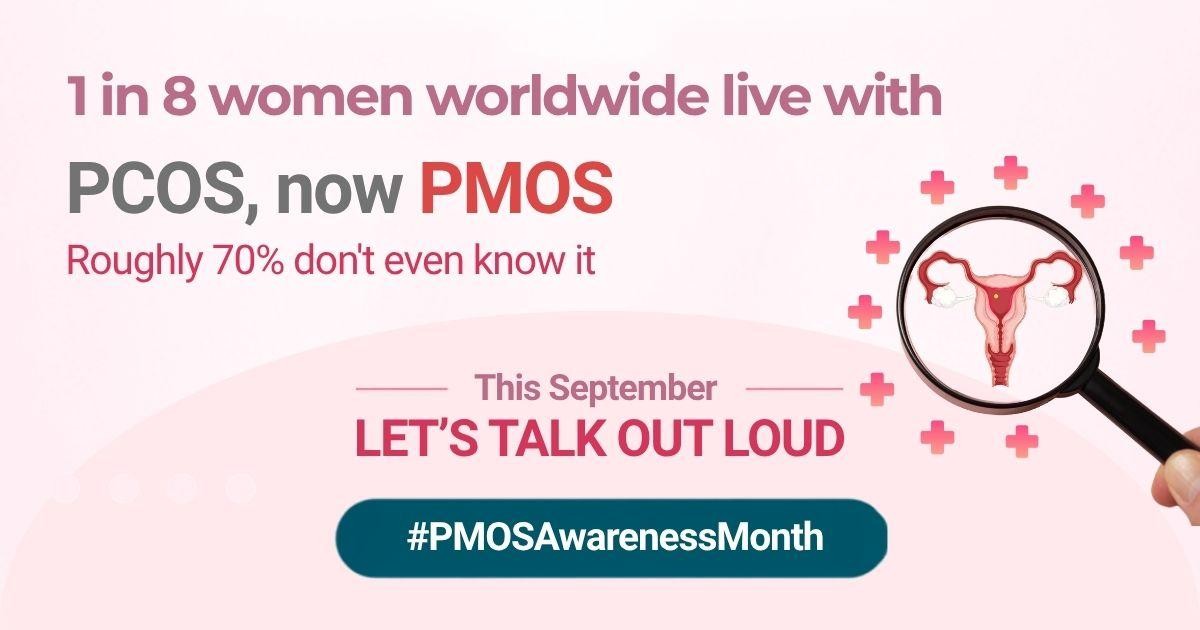
If you have PCOS, think you might have it, or have ever searched “why are my periods irregular?” online, there is something important to know this September.
On 12 May 2026, The Lancet announced a new name for polycystic ovary syndrome (PCOS): polyendocrine metabolic ovarian syndrome, or PMOS.
The name has changed. The condition itself has not. And for the many Indian women living with it, the more important question is simple: what does this change actually mean for me?
Why Did PCOS Become PMOS? And Does It Really Matter?
Yes, it does, perhaps more than the name change initially suggests.
The term “polycystic ovary syndrome” covers only part of the condition and has given rise to a common misconception, namely that the problem consists simply of cysts on the ovaries. Those structures are not in fact cysts; they are immature follicles. More importantly, the condition can involve much more than just the ovaries.
For years, women have gone to a gynaecologist because their periods were irregular, while important metabolic concerns such as insulin resistance received less attention. Others sought help for fertility problems without the wider hormonal and metabolic picture being fully addressed.
PMOS is intended to describe the broader picture more clearly: a condition involving the endocrine or hormonal system, metabolism, and reproductive health at the same time.
- If you already have a PCOS diagnosis, it remains valid. You do not need to be diagnosed again simply because the terminology has changed.
- The diagnostic criteria, including the Rotterdam criteria, remain the same.
- Existing treatments, including lifestyle measures, metformin, hormonal medicines and ovulation induction, continue to be used.
- PCOS and PMOS are expected to be used alongside each other during an approximately three-year transition period.
- The broader global clinical update is expected with the 2028 International Guidelines.
PMOS Symptoms: What It Can Feel Like in Everyday Life
A textbook list of symptoms is useful. But it does not always explain what living with PMOS can actually feel like.
For some women, the signs arrive slowly and seem unrelated. Fatigue is blamed on stress. Weight gain is reduced by diet. Acne becomes a skincare problem. Irregular periods are dismissed as “just how your body is.”
Sometimes those explanations are correct. Sometimes they are not. When PMOS is the underlying issue, looking at each symptom in isolation can make the bigger pattern easy to miss.
| Symptom | What may be happening |
|---|---|
| Irregular or missed periods | Hormonal imbalance disrupts regular ovulation |
| Weight gain, particularly around the abdomen | Insulin resistance increases fat storage |
| Difficulty losing weight | Metabolic and hormonal factors make weight management difficult. |
| Excess facial or body hair | Higher androgen levels stimulate hair follicles |
| Acne around the jaw and chin | Androgens can increase oil production in the skin |
| Scalp hair thinning | Hormonal imbalance affects scalp hair follicles |
| Feeling unusually tired after meals | Insulin resistance can affect the handling of blood sugar |
| Anxiety, low mood, or disrupted sleep | Hormonal changes and poor sleep reinforce one another. |
| Dark patches around the neck or armpits | Visible sign associated with insulin resistance. |
| Difficulty getting pregnant | Infrequent ovulation |
The Part of PMOS That Should Not Be Overlooked
PMOS is not only about periods or fertility. Women with the condition can have a higher lifetime risk of type 2 diabetes, cardiovascular disease, and metabolic liver disease.
That is why the broader PMOS framework places greater emphasis on monitoring metabolic health over time. Blood glucose, insulin-related markers, cholesterol, and blood pressure should not only be checked when something feels wrong. Regular follow-up matters.
Lifestyle measures remain a central part of treatment:
- 5% to 10% reduction in body weight can improve menstrual regularity, hormone levels, and fertility outcomes.
- Reduce refined carbohydrates, include more whole grains, lentils, vegetables, and protein.
- 150 minutes of weekly physical activity can improve insulin sensitivity
- Strength training and aerobic exercise offer different metabolic benefits, so a combination can be useful.
PMOS Awareness Month 2026 comes with a new name and a clearer way of understanding a condition that has long been misunderstood. But the central need remains the same: women should be able to recognise the signs, understand what may be happening in their bodies and access care that looks at the full picture.
If parts of this article sound familiar, do not ignore them or assume you simply have to live with them. The gynaecology and endocrinology team at Omega Hospitals offers comprehensive PMOS evaluation and personalised care across hormonal, metabolic and reproductive concerns.
The Questions Women Ask Most:
-
1. My periods are irregular. Could it be PMOS?
Possibly. But irregular periods alone do not confirm PMOS.
Cycles with fewer than eight periods a year, or cycles shorter than 21 days or longer than 35 days, can be one of the main diagnostic markers. However, thyroid problems, high prolactin levels, excessive exercise, and rapid weight loss can also affect the menstrual cycle.
An evaluation can help identify.
-
2. Why am I gaining weight even though I am trying?
This is one of the most frustrating parts of PMOS for many women because the struggle is often reduced to a question of effort or willpower.
When insulin resistance is present, the body may be more likely to store fat, particularly around the abdomen, and weight loss can become more difficult.
The conversation should not begin and end with “try harder.” It is a metabolic issue, not simply a willpower issue.
-
3. Can I get pregnant if I have PMOS?
Yes.
PMOS is one of the leading causes of ovulation-related infertility, but it is also a condition for which there are several effective treatment options. Many women with PMOS who want to conceive do so with appropriate medical support.
Some women conceive soon after treatment begins. Others take longer. Neither experience is unusual.
-
4. I have acne and facial hair. Could hormones be the reason?
They could be, particularly when both appear together.
Acne and excess facial or body hair can be part of the androgen-related pattern seen in PMOS. Androgens are present in all women, but higher levels can stimulate oil glands and hair follicles.
Treating the visible symptoms can help, but when hormones are contributing to the problem, it may also be necessary to address the underlying cause.