
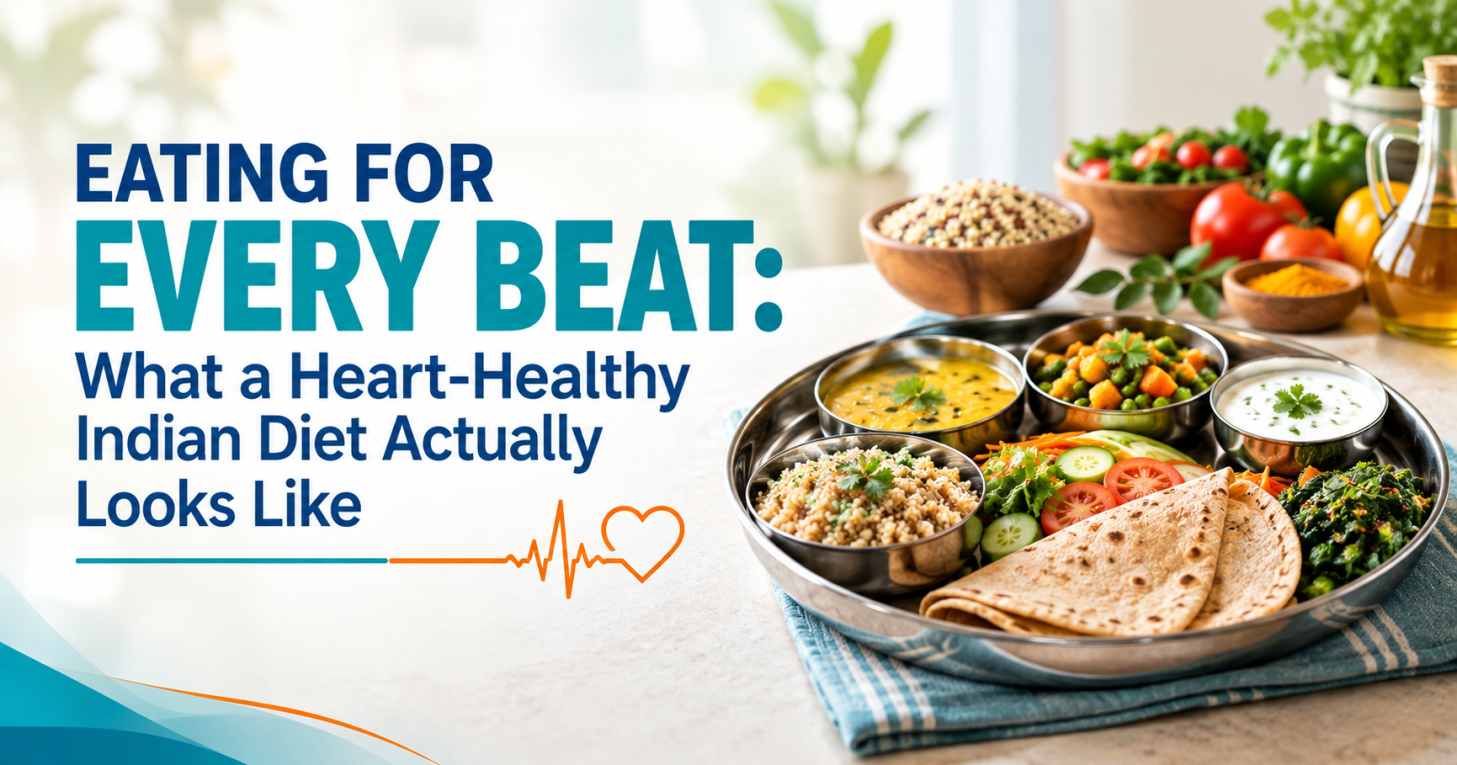
Ask most people what a heart-healthy diet looks like, and they’ll picture something foreign. Quinoa. Avocado toast. Maybe a green juice. But mostly “not Indian food.”
The gap is about how those foods are cooked, how much oil ends up in the kadhai, and how far the everyday plate has drifted from what it looked like a generation ago.
You don’t need a diet plan. You need a few honest adjustments to the plate you’re already eating. Let’s understand:
Why a Heart-Healthy Indian Diet Doesn’t Mean Giving Up Indian Food
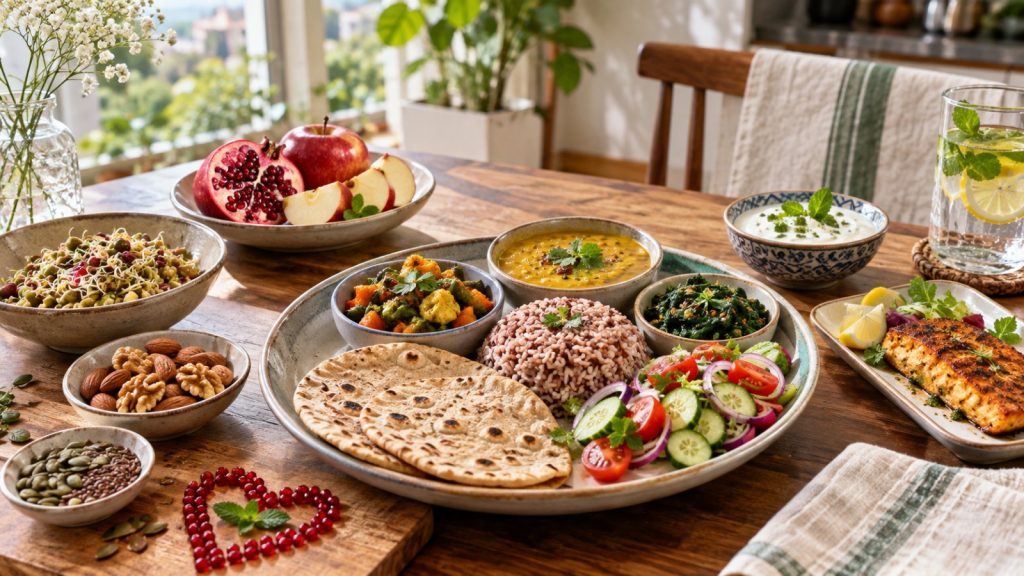
The traditional Indian plate already has strong bones. Dal. Seasonal vegetables. Whole grains, when they haven’t been polished into oblivion. Curd.
Three specific habits that crept in over the last few decades:
- Refined grains replacing whole ones (white rice and maida instead of millets, whole wheat, and brown rice)
- Oil quantity creeping up, especially in restaurant-style cooking at home
- Fried and packaged snacks replacing what used to be roasted or steamed
None of these require an overhaul. They require attention.
Small Swaps That Actually Stick
Here’s a comparison worth pinning on your fridge:
| Instead of | Try | Why it helps |
|---|---|---|
| White rice, daily | Rotate in millets, brown rice, or whole wheat | More fibre, better cholesterol response |
| Deep-fried snacks | Roasted makhana, roasted chana | Same crunch, far less oil |
| A generous splash of ghee | A measured spoon | Flavour intact, quantity controlled |
| Extra salt at the table | Spices doing the flavour work | Less sodium load on blood pressure |
| One cooking oil, always | Rotate mustard, groundnut, rice bran | Balanced fat profile over time |
Pick three from this list. Not all five. Three you’ll actually keep doing past the first week.
Salt deserves its own mention here, because it’s usually where good intentions fall apart. The WHO and ICMR guidance puts the general limit at around 5 grams of salt a day, dropping closer to 2 grams for people already managing a heart condition. That’s roughly half a teaspoon on the stricter end. Most of that salt isn’t even coming from the salt shaker. It’s baked into papad, pickle, packaged snacks, and restaurant food that never announces how much sodium it’s carrying.
What Doesn’t Need to Change
A few things about traditional Indian cooking are already working in your favour:
- Dal and legumes provide fibre and plant protein that support healthy cholesterol.
- Turmeric, garlic, and ginger aren’t just flavour; they carry anti-inflammatory properties that genuinely support cardiovascular health.
- Home cooking itself, even with some oil and salt, still beats most packaged and restaurant alternatives on sodium and trans fat.
You’re not starting from zero. You’re adjusting a foundation that was already reasonably solid before ultra-processed food muscled its way onto the plate.
Talk to a cardiologist or dietitian if you’re managing an existing condition, since portion sizes and specific restrictions change from person to person. But for most people reading this out of general concern, not diagnosis, the starting point is simpler than it looks.
Pick three swaps from the table above. Start this week.
FAQ: Eating for Every Beat
Is Indian food bad for heart health?
On the contrary, traditional Indian food—based on dal, vegetables, whole grains, and home cooking—does in fact provide a solid basis for heart health; the problem generally lies in the amount of oil, salt, and fried food that have found their way into ordinary meals, not in the cuisine as a whole.
Which oil is best for heart health in Indian cooking?
There’s no single “best” oil; variety matters more. Mustard oil, groundnut oil, and rice bran oil are commonly used and reasonable choices in moderate amounts. What matters most is avoiding repeated reheating of oil and cutting back on deep frying.
Can I still eat rice on a heart-healthy diet?
Yes. You don’t need to give up rice entirely. Rotating in millets, brown rice, or whole wheat a few times a week, instead of white rice every single meal, is a realistic middle ground.
Is ghee bad for the heart?
Not in small amounts. A measured spoon of ghee, rather than a generous splash, still lets you enjoy the flavor without it adding up. The concern is usually quantity and frequency, not the ingredient itself.
How much salt should I eat per day for heart health?
General health guidance suggests staying under about 5 grams of salt a day, and even less if you’re already managing a heart condition. Most of that salt hides in packaged snacks, pickles, and restaurant food, not just what you add at the table.
What foods should I avoid for a healthy heart?
It’s best to cut back on deep-fried snacks, highly processed packaged foods, and too much added sugar. You don’t have to give them up completely, just enjoy them once in a while instead of every day.