
A high fever after a mosquito bite can seem harmless at first, especially during the rainy season. But dengue can change quickly, and early dengue fever symptoms should never be brushed aside. Dengue affects millions of people worldwide each year, and the first signs often look like a bad flu.
Dengue Fever Symptoms to Watch for
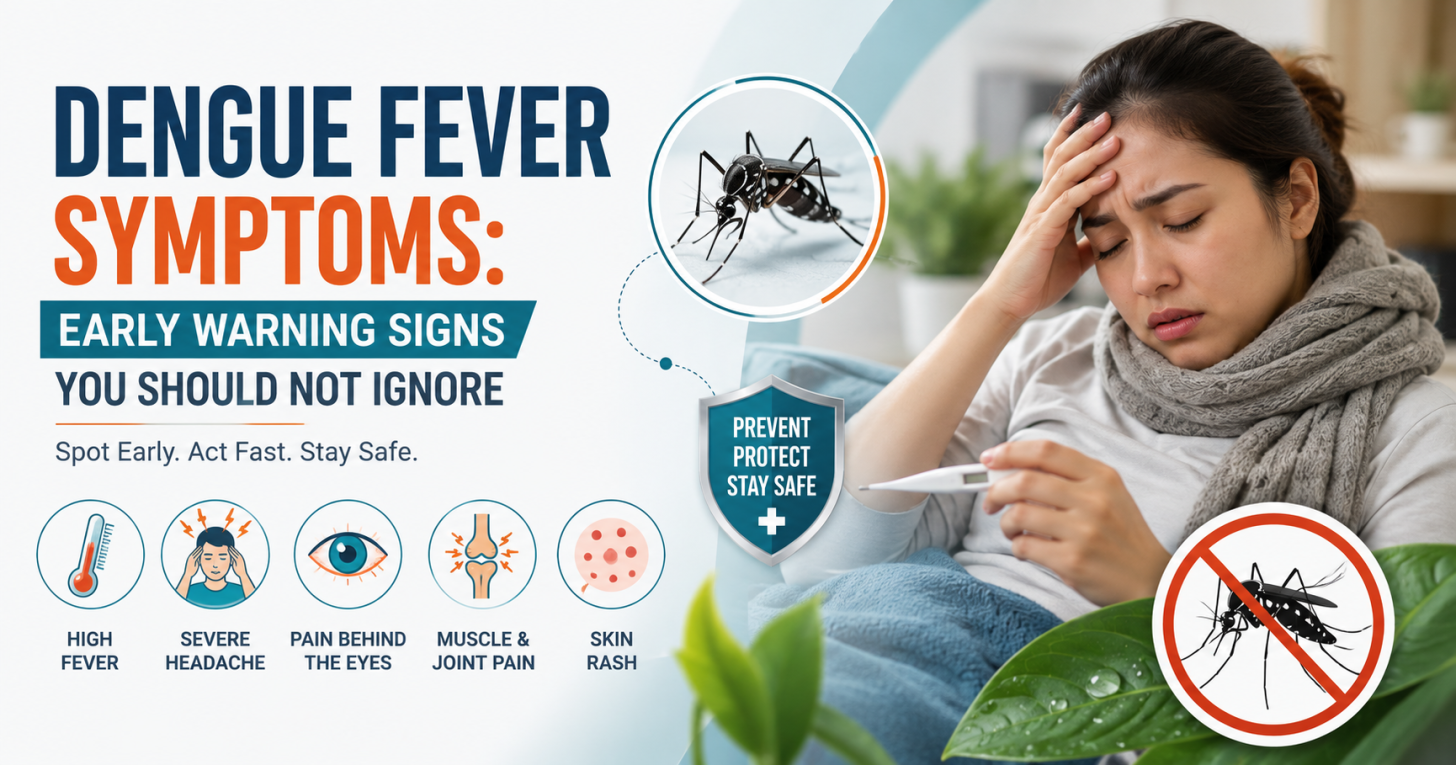
Dengue symptoms usually begin 4 to 10 days after an infected mosquito bite. The illness often starts suddenly. Many people notice a fever, headache, pain behind the eyes, body aches, and nausea. A rash may appear a few days later.
Common dengue fever symptoms include:
- Sudden high fever.
- Severe headache.
- Pain behind the eyes.
- Muscle and joint pain.
- Nausea or vomiting.
- Tiredness or weakness.
- Skin rash.
- Mild bleeding from the nose or gums in some cases.
These symptoms can feel like viral fever, but dengue needs closer attention because the condition can worsen after the fever starts to settle. The CDC notes that mild dengue symptoms typically last 2 to 7 days, and most people recover within about a week.
Dengue Fever Symptoms That Signal Severe Dengue
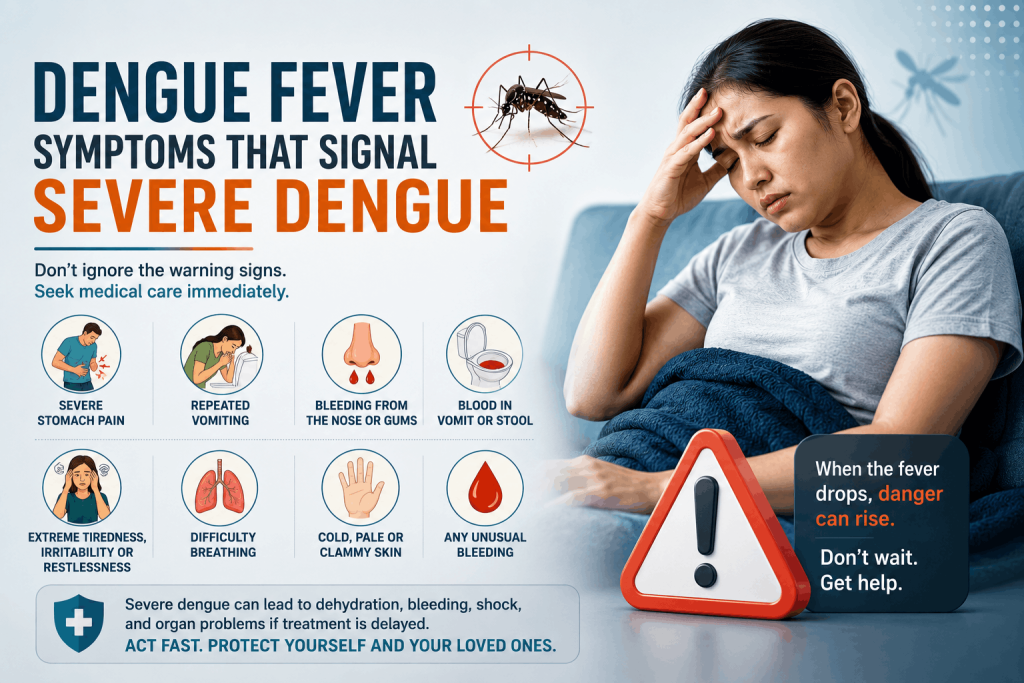
Some signs mean the illness may be turning serious. Not all dengue fever symptoms stay mild, and knowing the difference can be lifesaving. These warning signs often appear when the fever drops, which is why people sometimes feel wrongly reassured. That is a dangerous moment to ignore symptoms.
Watch for these warning signs:
- Severe stomach pain.
- Repeated vomiting.
- Bleeding from the nose or gums.
- Blood in vomit or stool.
- Extreme tiredness, irritability, or restlessness.
- Difficulty breathing.
- Cold, pale, or clammy skin.
These symptoms need urgent medical care. Severe dengue can lead to dehydration, bleeding, shock, and organ problems if treatment is delayed. Omega Hospitals’ emergency medicine and trauma care team is available 24/7 for exactly these situations.
Treating Dengue Fever Symptoms and Platelet Count
There is no specific antiviral medicine for dengue. Managing dengue fever symptoms at home is possible for most mild cases, but it still needs medical guidance. Treatment focuses on rest, fluids, and close monitoring. Doctors usually recommend paracetamol for fever and pain. They also advise avoiding ibuprofen and aspirin because these can increase bleeding risk.
Blood tests often check platelet count in dengue. Platelets help the blood clot. A falling platelet count can happen in dengue, but the number alone does not tell the full story. Some people may have a low count and recover well, while others may need urgent care because of bleeding or warning signs.
Do not wait for a specific platelet number before seeking help. The overall condition matters more than one test result. If fever is present with warning signs, get medical attention quickly. Omega Hospitals’ lab tests and health packages include dengue and platelet count testing for fast results.
When to See a Doctor for Dengue Fever
See a doctor for dengue if you have fever during a known outbreak, after mosquito exposure, or if symptoms match dengue fever symptoms. Seek care early if you live in an area where dengue spreads during the rainy season, because mosquito breeding increases with stagnant water. Omega Hospitals’ General Medicine department can assess your symptoms and guide next steps.
Go to a clinic or hospital right away if:
- Fever lasts more than a day or two with body pain and weakness.
- You cannot keep fluids down.
- You notice bleeding.
- The fever drops, but the person looks worse.
- A child, older adult, pregnant woman, or person with another illness develops dengue symptoms.
Early review helps doctors decide whether home care is safe or whether observation is needed.
Dengue prevention during rainy season
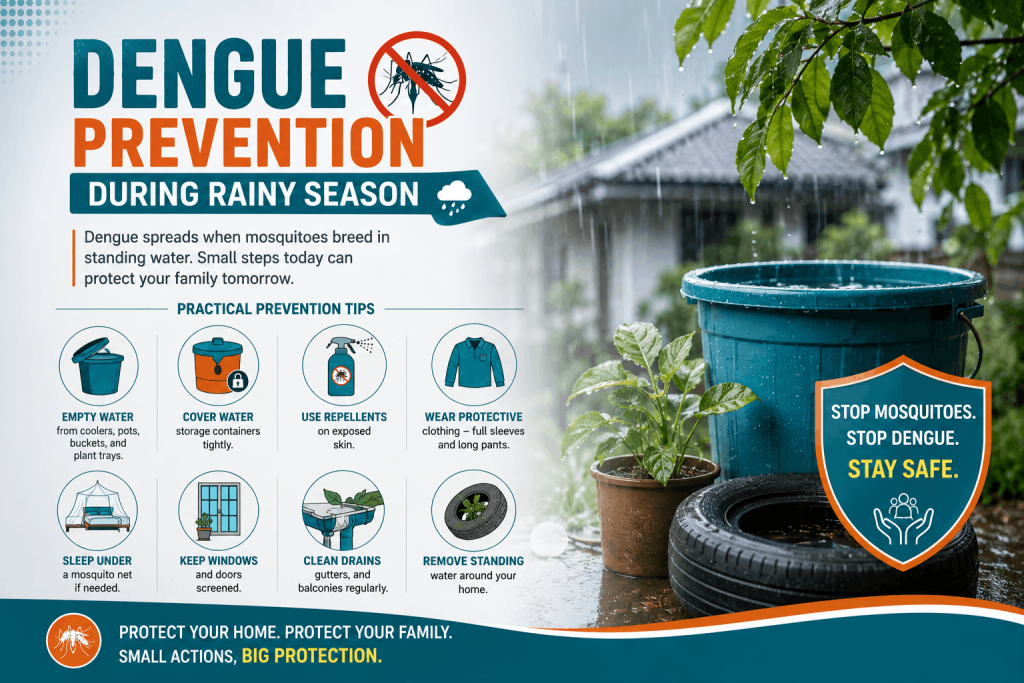
Dengue prevention starts with stopping mosquito bites and removing breeding sites. The best way to avoid dengue fever symptoms altogether is to stop a bite before it happens. The Aedes mosquito often breeds in clean, standing water around homes, especially during the rainy season.
Practical dengue prevention tips include:
- Empty water from coolers, pots, buckets, and plant trays.
- Cover water storage containers tightly.
- Use mosquito repellents on exposed skin.
- Wear full sleeves and long pants.
- Sleep under a mosquito net if needed.
- Keep windows and doors screened.
Simple daily habits can cut mosquito exposure and reduce the chance of infection.
Dengue Fever Symptoms: Key Takeaways
Dengue fever symptoms can start like a regular fever, but the warning signs can appear fast. That is why people should not ignore dengue symptoms just because the fever comes down. Rest, fluids, and early doctor review matter. So does prevention, especially during the rainy season. If you suspect dengue, do not self-medicate and do not delay care. Get tested, stay hydrated, and see a doctor for dengue symptoms that worsen or include bleeding, pain, or vomiting.