

Almost everyone coughs from time to time. A short cough after a cold is normal and usually clears in a week or two. But when a cough continues for weeks, or keeps returning without a clear reason, it deserves attention. A persistent cough lasting more than eight weeks is classified as chronic cough, and it is one of the most common reasons people seek medical care in India.
How Long Is Too Long? Understanding Cough Duration
Doctors classify a cough by how long it has been present, because duration is one of the strongest clues to the cause.
| Duration | Classification | Likely Cause |
|---|---|---|
| Less than 3 weeks | Acute | Viral respiratory infection, common cold, or flu |
| 3 to 8 weeks | Subacute | Post-infection irritation or an early developing condition |
| More than 8 weeks | Chronic | Requires medical evaluation |
A cough lasting more than two to three weeks, particularly if it is worsening, producing phlegm, or accompanied by other symptoms, should be evaluated by a doctor. Self-medicating beyond this point is a common reason for delayed diagnosis of treatable conditions.
Common Persistent Cough Causes in India
India has several cough triggers that are particularly relevant to the local population.
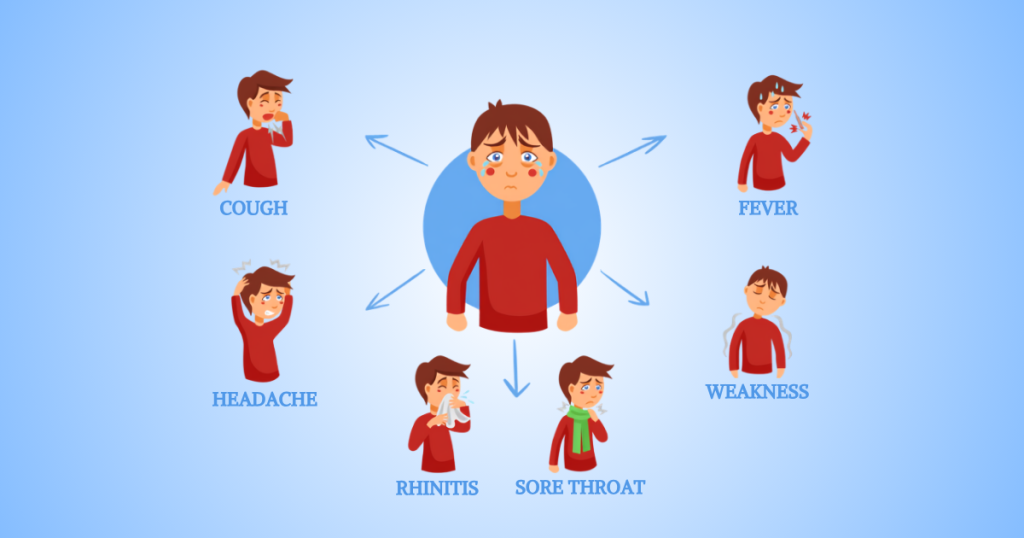
Tuberculosis (TB) Cough — A Key TB Symptom in India
India reported 2.42 million TB cases in 2022 under the National TB Elimination Programme, making it the country with the highest TB burden in the world. A cough lasting more than two weeks is the most commonly reported first symptom. TB develops slowly, which is why it is frequently mistaken for a lingering cold or seasonal infection.
Asthma Cough and Allergies
Allergic and asthma-related coughs are typically dry, triggered by dust, pollen, smoke, or weather changes. These are among the most common causes of persistent dry cough in urban India, particularly in high-pollution cities.
Acid Reflux — A Common Cause of Cough Due to Acid Reflux
Stomach acid travelling back into the throat is a frequently overlooked cause of chronic cough. It is often worse at night or after meals, and may occur without obvious heartburn.
Air Pollution Cough and Biomass Fuel Exposure
Research published in Lung India identifies outdoor air pollution, biomass fuel use for cooking, and beedi smoking as risk factors specific to India. Respiratory symptoms are reported more frequently among beedi smokers than cigarette smokers.
Other causes to be aware of:
- COPD — cough due to COPD is a chronic lung condition most common in long-term smokers
- Post-nasal drip, where mucus from the nose drips down the back of the throat
- Certain blood pressure medicines, particularly those in the ACE inhibitor class
- Lung cancer, particularly in smokers above the age of 40
When to See a Doctor for Cough: Symptoms That Require Prompt Medical Attention
Most persistent coughs have treatable causes. However, the following symptoms alongside a cough need prompt evaluation, not more waiting.
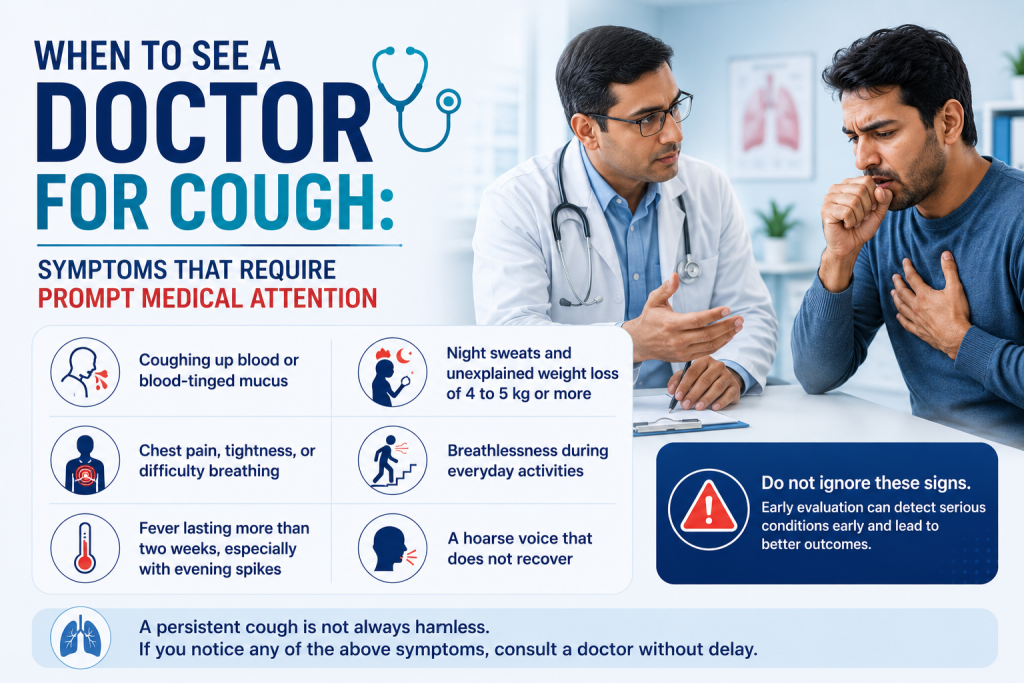
Cough with Blood or These Warning Signs — See a Doctor Without Delay
- Coughing up blood or blood-tinged mucus
- Chest pain, tightness, or difficulty breathing
- Fever lasting more than two weeks, especially with evening spikes
- Night sweats and unexplained weight loss of 4 to 5 kg or more
- Breathlessness during everyday activities
- A hoarse voice that does not recover
The combination of a prolonged cough with fever, cough and weight loss, and night sweats — along with a persistent cough at night — requires investigation for TB or another lung condition without delay.
Treatment Depends on the Cause
There is no single cough treatment for a persistent cough because chronic cough treatment targets the specific underlying cause, from post nasal drip cough to acid reflux to TB.
| Cause | Primary Treatment Approach |
|---|---|
| Tuberculosis (TB) | 6-month antibiotic course under NTEP, available free of cost in India |
| Asthma | Inhaled medicines to reduce airway inflammation |
| Acid Reflux | Dietary changes, antacids, or acid-reducing medicines |
| Allergic Cough | Antihistamines and avoiding identified triggers |
| Chronic Obstructive Pulmonary Disease (COPD) | Inhalers, pulmonary rehabilitation, and smoking cessation |
| Post-nasal Drip | Nasal sprays, antihistamines, and treating the underlying trigger |
When you visit a doctor for a persistent cough, an evaluation typically includes a physical examination, chest X-ray, sputum test for TB if indicated, and in some cases, a breathing test called spirometry to check for asthma or COPD.
When to Act: A Quick Reference
| Symptom with Cough | What to Do |
|---|---|
| Cough for over 2 weeks with fever and weight loss | See a doctor promptly. TB evaluation is needed. |
| Coughing up blood | Seek medical care without delay. |
| Breathlessness worsening over days | Seek immediate medical evaluation. |
| Cough for over 8 weeks without an identified cause | A pulmonology consultation is recommended. |
A persistent cough is rarely something to panic about, but it is not something to manage indefinitely on your own. In India, where TB, air pollution-related lung conditions, and asthma all contribute significantly to chronic respiratory symptoms, early evaluation leads to earlier treatment and better recovery.
If you have had a cough lasting more than two to three weeks, particularly with any of the symptoms listed above, speak with the pulmonologist in Hyderabad or internal medicine team at Omega Hospitals. The right diagnosis starts with the right evaluation.