
During the scorching summer, India experiences one of its deadliest heat waves on record every year. According to the National Centre for Disease Control (NCDC), 24,849 suspected heat stroke cases were reported between March and June in 2024, with 56 confirmed deaths. However, a report by HeatWatch revealed the actual toll was far higher, with 733 heat-related deaths identified through media reports.
In Hyderabad alone, temperatures soared to 42.6 degrees Celsius in areas like Balanagar and Uppal, as reported by the Telangana State Development Planning Society (TSDPS).
These numbers tell a stark story. Many of these deaths could have been prevented if people had recognized the difference between heat stroke and heat exhaustion early enough. Whether you’re commuting during peak afternoon hours, working outdoors, or attending summer events, understanding heat stroke symptoms and heat exhaustion symptoms can help you act early and save lives.
Understanding the Difference Between Heat Stroke and Heat Exhaustion
Heat exhaustion and heat stroke exist on a spectrum, but the distinction between them determines whether you need immediate home care or emergency hospitalization.
Key Differences at a Glance:
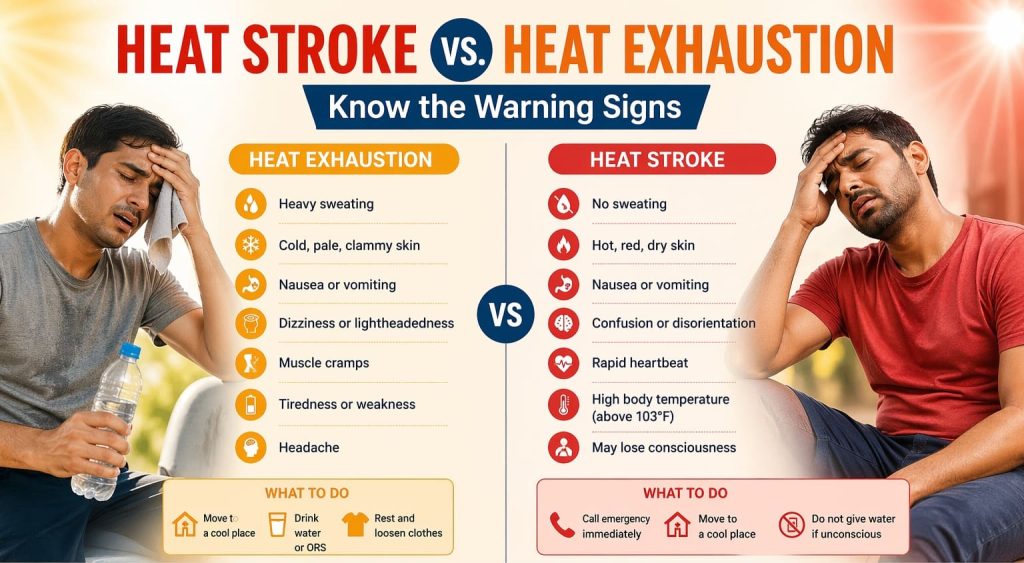
| Factor | Heat Exhaustion | Heat Stroke |
|---|---|---|
| Body Temperature | Below 40°C (104°F) | 40°C (104°F) or higher |
| Sweating | Heavy, profuse | May stop completely |
| Skin | Cool, pale, clammy | Hot, red, dry, or damp |
| Mental State | Normal, alert | Confused, disoriented |
| Urgency | Serious, needs attention | Life-threatening emergency |
| Recovery | Usually within 30 minutes | Requires hospitalization |
Source: National Centre for Disease Control (NCDC) Guidelines, 2024
Heat Exhaustion Symptoms: Early Warning Signs You Should Not Ignore
Physical Symptoms You’ll Notice (heat exhaustion symptoms include):
- Heavy sweating with cool, clammy skin
- Muscle cramps in the legs and abdomen
- Weakness and extreme tiredness
- Dizziness or feeling faint
- Headache that persists
- Nausea or vomiting
- Fast, weak pulse
Critical Point: Your mental state remains normal with heat exhaustion. You can still think clearly, answer questions, and know where you are, even though you feel terrible.
Heat Exhaustion Treatment at Home: Immediate Action Steps
Most people recover from heat exhaustion within 30 minutes if treated promptly. Here’s what to do immediately. These steps are part of heat exhaustion treatment at home and can prevent progression to heat stroke.
Step 1: Move to a cool environment
- Go indoors to air conditioning if possible
- Find the shadiest spot available if the AC is unavailable
- Leave direct sunlight immediately
Step 2: Cool Down the Body
- Remove tight or excess clothing
- Apply cool, wet towels to the forehead, neck, armpits, and groin
- Take a cool shower or bath if available
Step 3: Rehydrate Properly
- Drink cool water or electrolyte drinks
- Sip about 120 ml (4 ounces) every 15 minutes
- Avoid alcohol and caffeinated beverages
- Drink slowly, don’t gulp
Step 4: Rest and Monitor
- Lie down with feet elevated
- This helps blood flow and cooling
- Watch for improvement over the next 30 minutes
Important Timeline: If symptoms don’t improve within 30 minutes, go to the emergency room immediately. Heat exhaustion can quickly progress to heat stroke.
Heat Stroke Symptoms in Adults: Signs of a Life-Threatening Emergency
Heat stroke occurs when your body’s cooling system completely fails, and the temperature rises to 40°C or higher.
Signs of Heat Stroke in Adults:
Physical Changes:
- Body temperature 40°C (104°F) or higher
- Hot, red, dry skin (or damp if from physical activity)
- Rapid, strong pulse
- Rapid, shallow breathing
- May stop sweating entirely
Mental and Behavioral Changes (Critical Warning Signs):
- Confusion or inability to think clearly
- Slurred speech
- Unusual aggression or irritability
- Seizures
- Loss of consciousness
- Hallucinations
Why Mental Changes Matter: The change in mental state is the key sign differentiating heat stroke from heat exhaustion. If someone becomes confused or can’t answer simple questions, this is heat stroke.
When to Go to the Hospital for Heat Stroke: Every Second Counts
Call Emergency Services (Dial 108 or 102) Immediately If:
- Body temperature reaches 40°C or higher
- A person becomes confused or disoriented
- Slurred speech develops
- Any seizure occurs
- A person faints or loses consciousness
- Skin becomes hot and dry
- Heat exhaustion symptoms don’t improve in 30 minutes
Why Speed Matters: Heat stroke can cause damage to the heart, kidneys, liver, and brain within hours. The longer the body temperature stays dangerously high, the greater the risk of permanent damage or death. Immediate heat stroke treatment is critical to prevent organ damage and save life.
Heat Stroke First Aid: What to Do Immediately
If you suspect heat stroke, start heat stroke first aid immediately while waiting for emergency services:
- Move the person to a cool or shaded area
- Remove excess clothing
- Apply cold packs to neck, armpits, and groin
- Use fans or air conditioning to lower body temperature
- Do not give fluids if the person is unconscious
Prevention Strategies Based on NCDC Guidelines
These steps help prevent both heat stroke and heat exhaustion during extreme summer conditions
Signs of Heat Stroke in Adults:
Hydration Protocol:
- Drink water every 15-20 minutes during heat waves
- Maximum 1.5 liters per hour
- Supplement with electrolyte drinks during physical activity
Clothing and Sun Protection:
- Wear loose, lightweight, light-colored clothing
- Apply SPF 30+ sunscreen (sunburn reduces cooling ability)
Timing and Activity:
- Avoid outdoor activity between 11 a.m. and 4 p.m.
- Schedule strenuous work for early morning or late evening
- Take frequent breaks in shade or AC
Medication Awareness:
- Consult a doctor about the heat sensitivity of your medications
- Some medications affect the body’s cooling ability
Critical Takeaways
Remember These Numbers:
- 40°C body temperature = heat stroke emergency
- 30 minutes = maximum wait time for heat exhaustion improvement
- 108 or 102 = emergency numbers to call
Key Differences:
- Heat exhaustion: sweating, cool skin, normal thinking
- Heat stroke: may stop sweating, have hot skin, and have confused thinking
Immediate Action Required When:
- Confusion or strange behavior develops
- Temperature exceeds 40°C
- Symptoms worsen instead of improving
Choosing Emergency Care
When heat stroke occurs, immediate access to emergency care is critical. Look for hospitals with:
- 24/7 emergency services
- Rapid cooling equipment and protocols
- Intensive care capabilities
- Experience with heat-related emergencies
Heat Stroke Treatment in Hyderabad
If you or your loved one shows heat stroke symptoms or severe heat exhaustion symptoms, immediate medical care is critical. At Omega Hospitals, we provide 24/7 emergency heat stroke treatment in Hyderabad, equipped with advanced cooling protocols and experienced specialists.