
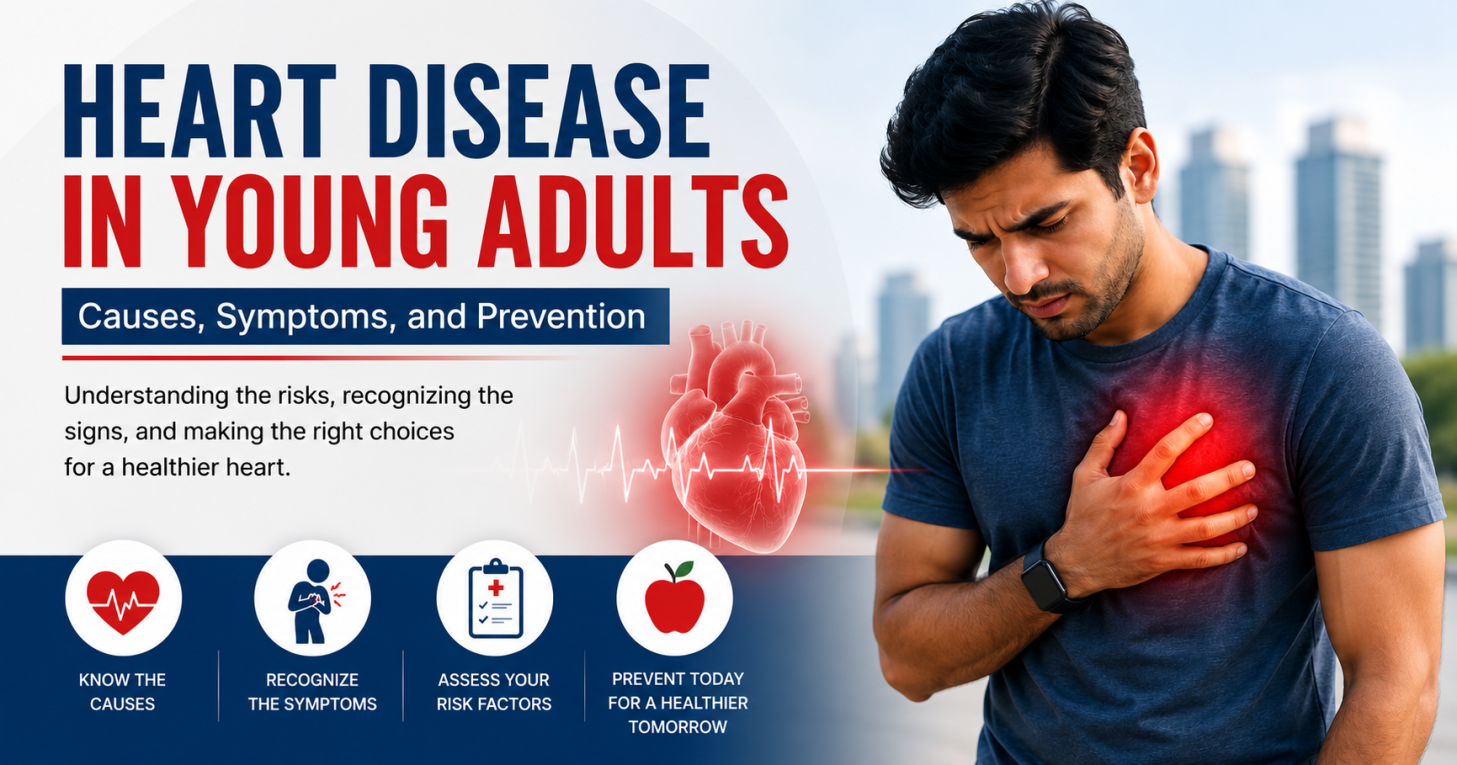
One in every five heart attack patients in India today is under the age of 40. A decade ago, that number was closer to one in ten. Heart disease was once considered uncommon among young adults and largely associated with older age. In India, that is no longer an accurate picture, and understanding why this shift is happening is one of the most important things a young adult can do for their long-term health.
The rise of heart disease in young adults in India is becoming a significant public health concern, with lifestyle changes, stress, and metabolic disorders contributing to the growing burden of cardiovascular disease.
Heart Disease in Young Adults: Key Statistics in India
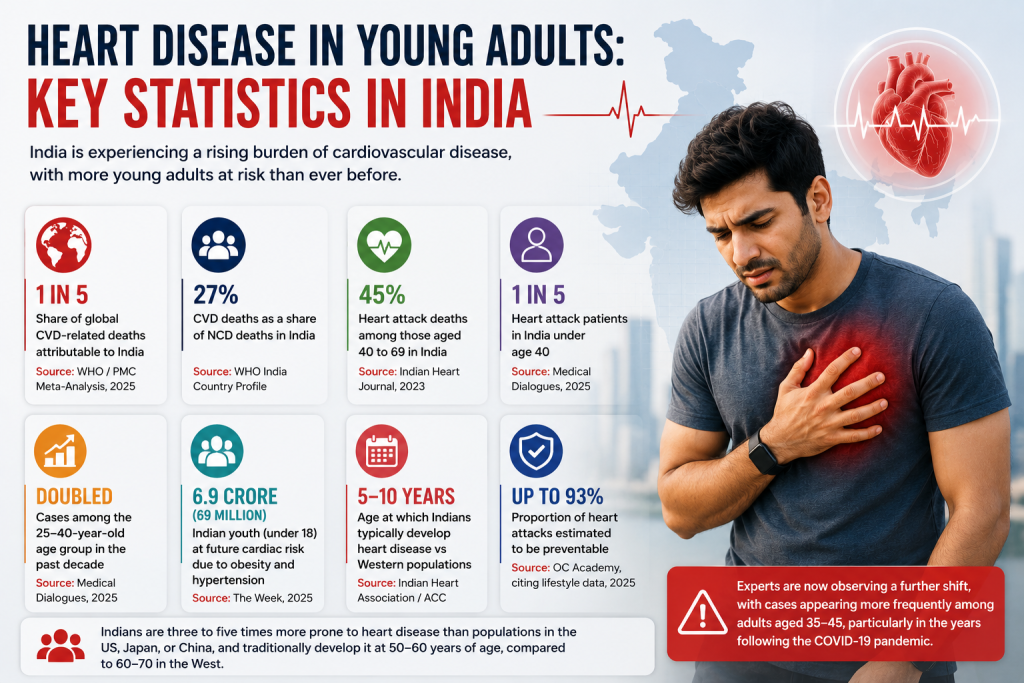
| Metric | Data | Source |
|---|---|---|
| Share of global CVD-related deaths attributable to India | 1 in 5 | WHO / PMC Meta-Analysis, 2025 |
| CVD deaths as a share of NCD deaths in India | 27% | WHO India Country Profile |
| Heart attack deaths among those aged 40 to 69 in India | 45% of all deaths in this group | Indian Heart Journal, 2023 |
| Heart attack patients in India under age 40 | 1 in 5 | Medical Dialogues, 2025 |
| Cases among the 25 to 40-year-old age group in the past decade | Doubled | Medical Dialogues, 2025 |
| Indian youth (under 18) at future cardiac risk due to obesity and hypertension | 6.9 crore (69 million) | The Week, 2025 |
| Age at which Indians typically develop heart disease vs Western populations | 5 to 10 years earlier | Indian Heart Association / ACC |
| Proportion of heart attacks estimated to be preventable | Up to 93% | OC Academy, citing lifestyle data, 2025 |
Indians are three to five times more prone to heart disease than populations in the US, Japan, or China, and traditionally develop it at 50 to 60 years of age, compared to 60 to 70 in the West. What experts are now observing is a further shift, with cases appearing more frequently among adults aged 35 to 45, particularly in the years following the COVID-19 pandemic.
Causes of Heart Disease in Young Adults
Understanding the causes of heart disease in young adults can help identify risks early and encourage preventive measures before serious complications develop.
Heart disease in young adults does not develop overnight. It is the result of several interacting factors, many of which are lifestyle-related and therefore modifiable.
- Chronic stress and long working hours
- Obesity and physical inactivity
- Unhealthy diet
- Tobacco use
- Undetected high blood pressure and diabetes
- Genetic predisposition
While these risk factors increase the likelihood of developing cardiovascular disease, recognizing symptoms early is equally important. Timely medical attention can help prevent serious complications and improve outcomes.
Heart Disease Symptoms in Young Adults Often Miss
The symptoms of heart disease in young adults are often subtle and may be mistaken for stress, fatigue, or digestive issues. Unlike older patients, young adults often dismiss early symptoms as acidity or anxiety, and by the time they reach a hospital, more damage has been done. Recognizing the range of warning signs is important because heart disease symptoms in younger people can be less obvious than the classic chest pain portrayed in popular media.
Common heart disease symptoms that should be discussed with a doctor include:
- Chest discomfort, pressure, tightness, or a squeezing sensation, even if mild
- Shortness of breath during light activity or at rest
- Palpitations, an awareness of the heart beating rapidly, unevenly, or too hard
- Unexplained fatigue that does not improve with sleep
- Dizziness or lightheadedness without a clear cause
- Discomfort in the left arm, jaw, neck, or upper back
- Nausea or cold sweats that are not linked to any obvious illness
An important note: These symptoms do not always indicate a cardiac emergency. However, if they are new, recurring, or occur alongside exertion, they merit a prompt medical evaluation.
Preventing Heart Disease in Young Adults: What Actually Works
Prevention is far more effective than treatment, and most heart disease risk factors in young adults are modifiable. These steps are grounded in current clinical evidence.
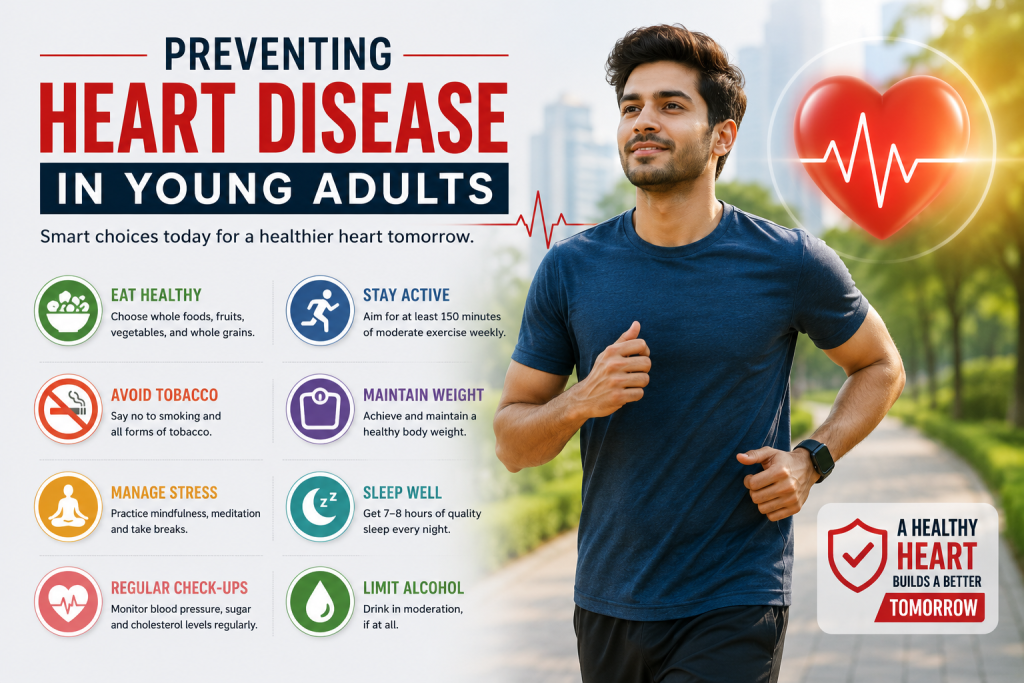
- Prioritize whole grains, lentils, vegetables, and fruits daily
- Reduce processed foods, packaged snacks, red meat, and excess salt
- Keep alcohol consumption minimal
- A healthy diet plays a crucial role in heart health and reducing long-term heart disease risk factors.
Physical Activity and Exercise
- Aim for at least 150 minutes of moderate physical activity per week
- Break up long periods of sitting with short movement breaks throughout the workday
- Regular exercise is one of the most effective ways of preventing heart disease in young adults.
Tobacco
- Avoid all forms of tobacco, including chewing tobacco, bidis, and cigarettes
- Even occasional smoking carries measurable cardiovascular risk
Routine Health Screenings
From the age of 25, or earlier, with a family history, discuss the following with your doctor:
- Blood pressure measurement
- Fasting blood sugar and HbA1c (a three-month blood sugar average)
- Lipid profile (cholesterol levels)
- Body weight and waist circumference
- Screening for conditions such as high blood pressure and heart disease, diabetes, and high cholesterol can help detect problems early.
Sleep and Stress
- Target 7 to 8 hours of sleep per night consistently
- Chronic sleep deprivation is independently linked to higher blood pressure and cardiovascular risk
A Quick Reference Summary
| Risk Factor | Who Is Most Affected | What to Do |
|---|---|---|
| Chronic Stress | Young urban professionals, ages 25 to 45 | Manage sleep, activity, and recovery actively |
| Obesity and Physical Inactivity | Urban adults in sedentary roles | At least 150 minutes of physical activity per week |
| Undetected Hypertension | Often asymptomatic young adults | Check blood pressure annually from age 25 |
| Tobacco Use | Young men, particularly in tier-2 and tier-3 cities | Stop all forms of tobacco use |
| Family History of Heart Disease | Any age group | Start screening early and adopt healthy lifestyle habits from your 20s |
If you are a young adult with any of the risk factors for heart disease in young adults, or if you have been experiencing heart attack symptoms or other warning signs, speak with a cardiologist or general physician at Omega Hospitals. Although heart disease in young adults is increasing across India, early diagnosis, lifestyle modifications, and regular screening can significantly reduce the risk of future cardiovascular events.
A comprehensive cardiovascular risk assessment is a straightforward and valuable step that can identify issues well before they become emergencies. Early evaluation does not create concern. It creates clarity and often, reassurance.