
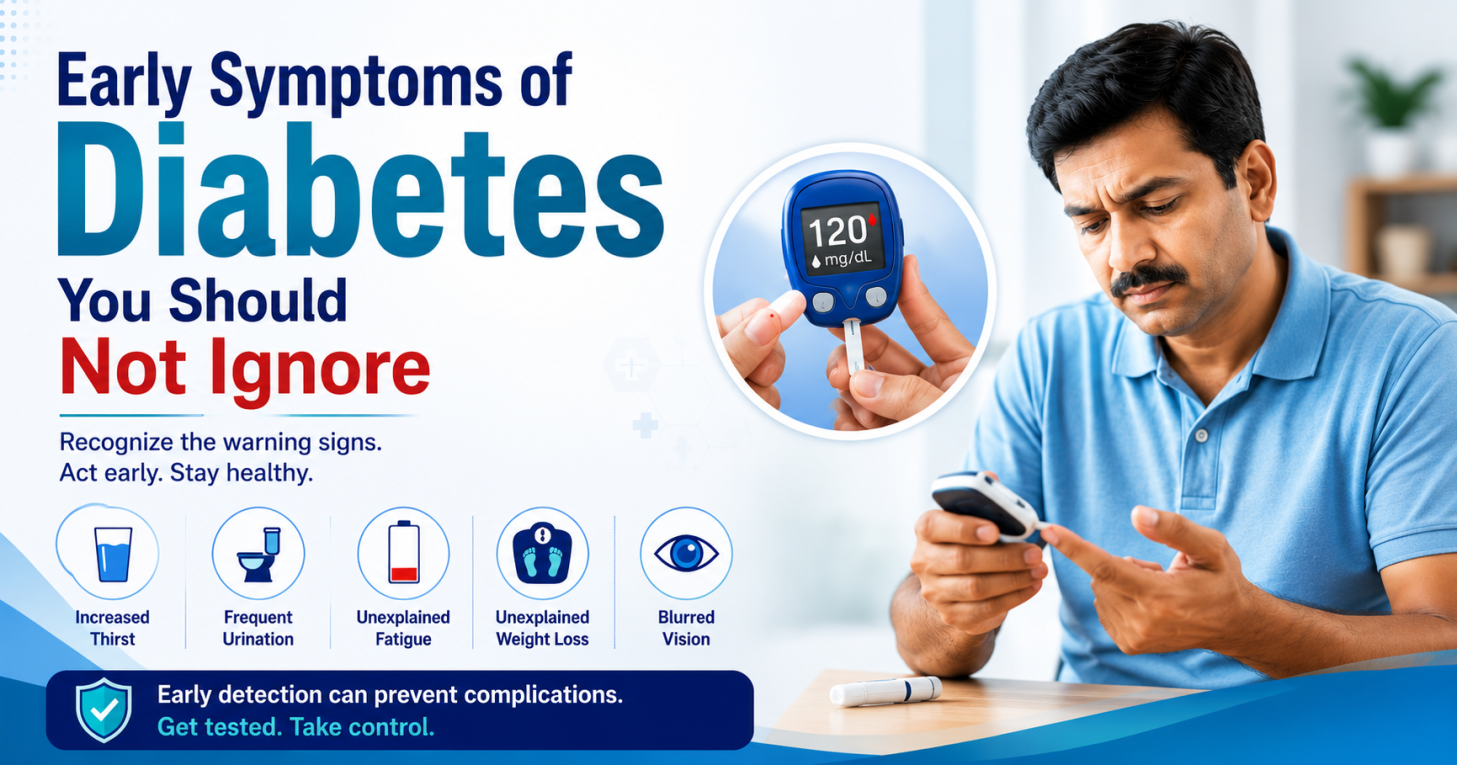
India is home to 101 million people living with diabetes and another 136 million with prediabetes, a condition where blood sugar is higher than normal but not yet at the level of a diabetes diagnosis. What makes this particularly significant is that more than half of all diabetic individuals in India are undiagnosed. In a real-world pan-India study published in Diabetes Research and Clinical Practice (2024), nearly 1 in 2 people tested fell into either the diabetes or prediabetes category. Most had no idea.
This is why recognising the early symptoms of diabetes and diabetes warning signs matters more than most people realise.
Why Diabetes Often Goes Undetected
Type 2 diabetes develops slowly. Early blood sugar rises rarely cause dramatic symptoms, which is precisely why millions of people in India live with the condition for years before receiving a diabetes diagnosis. By the time symptoms become obvious, complications involving the kidneys, eyes, nerves, or heart may already be under way.
Understanding what to look for, and when to act, is the most practical step toward catching diabetes early. A proactive comprehensive health checkup INT that includes blood sugar screening can identify diabetes or prediabetes before any symptoms appear.
Early Diabetes Symptoms: What to Watch For
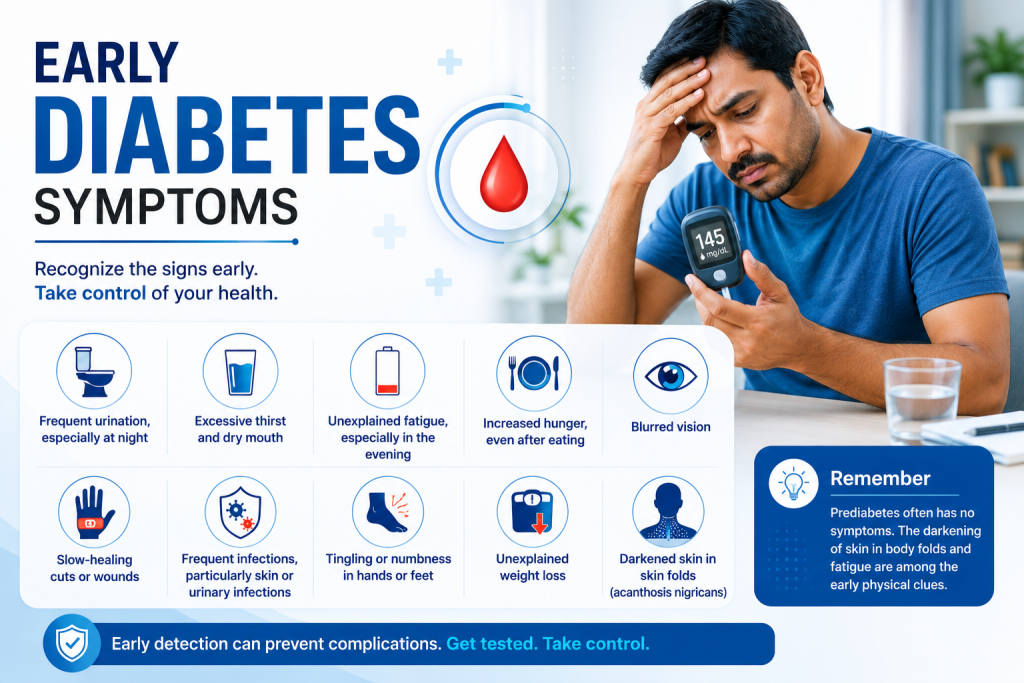
The following diabetes symptoms are common in both prediabetes symptoms and early type 2 diabetes symptoms. Many people experience several of these at once without connecting them to blood sugar.
| Symptom | Why It Happens |
|---|---|
| Frequent urination, especially at night | The kidneys work harder to filter excess sugar from the blood, producing more urine. |
| Excessive thirst and dry mouth (diabetes thirst) | Fluid is lost through frequent urination, leading to persistent dehydration. |
| Unexplained fatigue, especially in the evening (diabetes fatigue) | Cells cannot use sugar for energy efficiently when insulin is not working properly. |
| Increased hunger, even after eating | Without effective insulin, cells do not receive enough energy from food. |
| Blurred vision (blurred vision diabetes) | High blood sugar causes fluid shifts that temporarily affect the lens of the eye. |
| Slow-healing cuts or wounds | High blood sugar impairs circulation and the immune response, delaying healing. |
| Frequent infections, particularly skin or urinary infections | Bacteria and fungi thrive in high-sugar environments. |
| Tingling or numbness in hands or feet (numbness diabetes) | Prolonged high blood sugar can begin to affect nerve function, even in the early stages. |
| Unexplained weight loss (diabetes and weight loss) | In some cases, particularly type 1 diabetes, the body breaks down fat and muscle for energy. |
| Darkened skin in skin folds (acanthosis nigricans) | A sign of insulin resistance, often visible before a diabetes diagnosis. |
Important: Prediabetes typically causes no symptoms at all. The darkening of skin in body folds (a condition called acanthosis nigricans) and diabetes fatigue are among the few early physical clues. Prediabetes symptoms are often missed because most people with prediabetes are identified only through a blood test.
Who Is Most at Risk in India? Diabetes Risk Factors Explained
India has a unique risk profile for diabetes, and several diabetes risk factors increase the likelihood of developing the condition earlier than in other populations. Recognizing these signs of diabetes in India early is critical for timely intervention.
Key risk factors for type 2 diabetes in India:
- Family history of diabetes in a first-degree relative
- Abdominal obesity, even at a normal overall body weight
- Age above 40, though rates are rising among younger adults
- Sedentary lifestyle and desk-based work without regular physical activity
- Diets high in refined carbohydrates, sugary drinks, and fried foods
- History of high blood pressure or high cholesterol
- Gestational diabetes during pregnancy
A 2025 study in Scientific Reports found 41.2% of Indian adults aged 45 and above were at high risk of type 2 diabetes, with states such as Kerala, Delhi, Telangana, and Andhra Pradesh showing the highest proportions of at-risk adults. These diabetes in India statistics highlight the urgent need for early screening.
What You Can Do: Diabetes Prevention and Early Action
Get Tested if You Have Diabetes Risk Factors
Testing for diabetes requires a simple blood test. The most commonly used tests in India include fasting blood sugar, HbA1c test (a three-month blood sugar average), and post-meal blood sugar. ICMR recommends diabetes screening in India from age 30 for those with any risk factors, rather than waiting for symptoms.
Reduce Modifiable Risk Factors for Diabetes Prevention
Effective diabetes prevention starts with lifestyle changes. See our guide on diabetes diet plan for Indians and how weight loss supports diabetes prevention
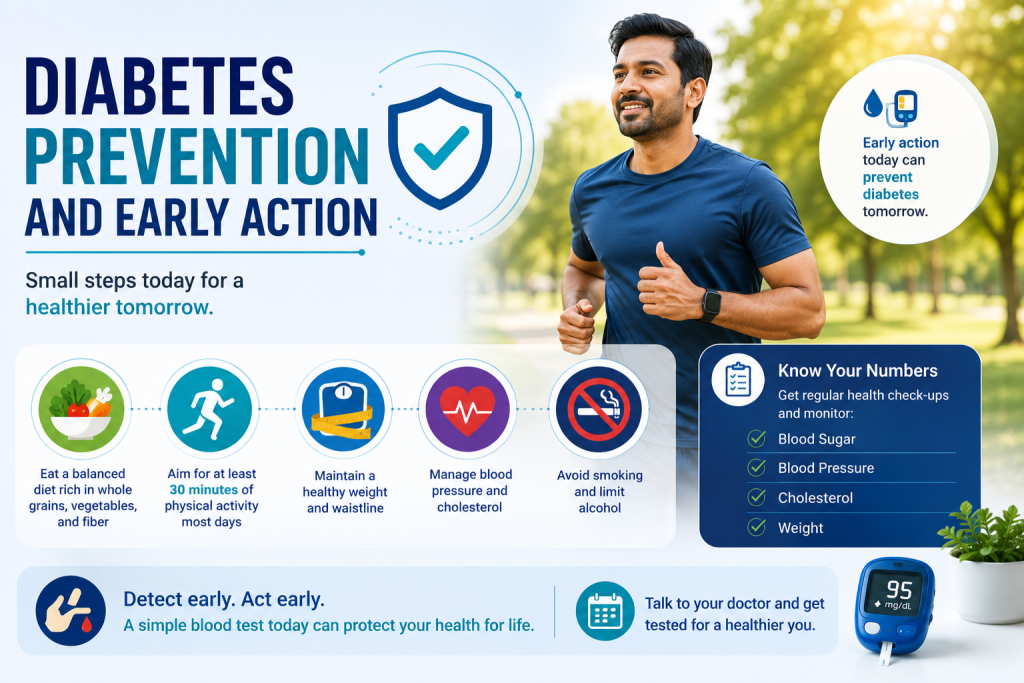
- Replace refined grains and sugary foods with whole grains, dal, vegetables, and fibre
- Aim for at least 30 minutes of physical activity most days
- Keep waist circumference below 90 cm (men) and 80 cm (women) as per Indian guidelines
- Manage blood pressure and cholesterol alongside blood sugar
Act early if blood sugar symptoms appear: increased thirst, frequent urination diabetes, and unexplained fatigue lasting more than a few weeks should not be dismissed without a blood test. Research on prediabetes reversal consistently shows that lifestyle changes at this stage can prevent or significantly delay the onset of type 2 diabetes.
Quick Reference: When to Get Tested for Diabetes Symptoms
| Situation | Recommended Action |
|---|---|
| No symptoms, no risk factors, above 40 years | Routine blood sugar screening every 1 to 3 years. |
| One or more risk factors (family history, obesity, sedentary lifestyle) | Annual blood sugar test starting from age 30. |
| Symptoms such as frequent urination, fatigue, or blurred vision | Get a blood sugar test without waiting for the next routine check-up. |
| Prediabetes already diagnosed | Follow lifestyle interventions and have an HbA1c test every 6 months. |
Diabetes is not inevitable, and its early stages are reversible with the right intervention. The most important step for most people in India is simply finding out where their blood glucose stands. Read our guide on how to control blood sugar naturally INT for practical steps you can take today.
If you have any of the early symptoms of diabetes listed above, have a family history of diabetes, or have not had a blood sugar test in the last year, speak with an endocrinologist or general physician at Omega Hospitals. The diabetes care team provides comprehensive diabetes screening, personalised risk assessment, and management plans tailored to your stage and needs. Book your appointment today.