
There was a time when Vinod Kambli walked onto the field with certainty. His game depended on timing, instinct, and clarity.
Today, the struggle is different.
Not against pace or spin.
But against memory.
At 54, reports suggest he remembers in fragments. Some things return. Many don’t. Conversations drift. Continuity breaks. What remains is not just memory loss, but the visible aftermath of something far less visible.
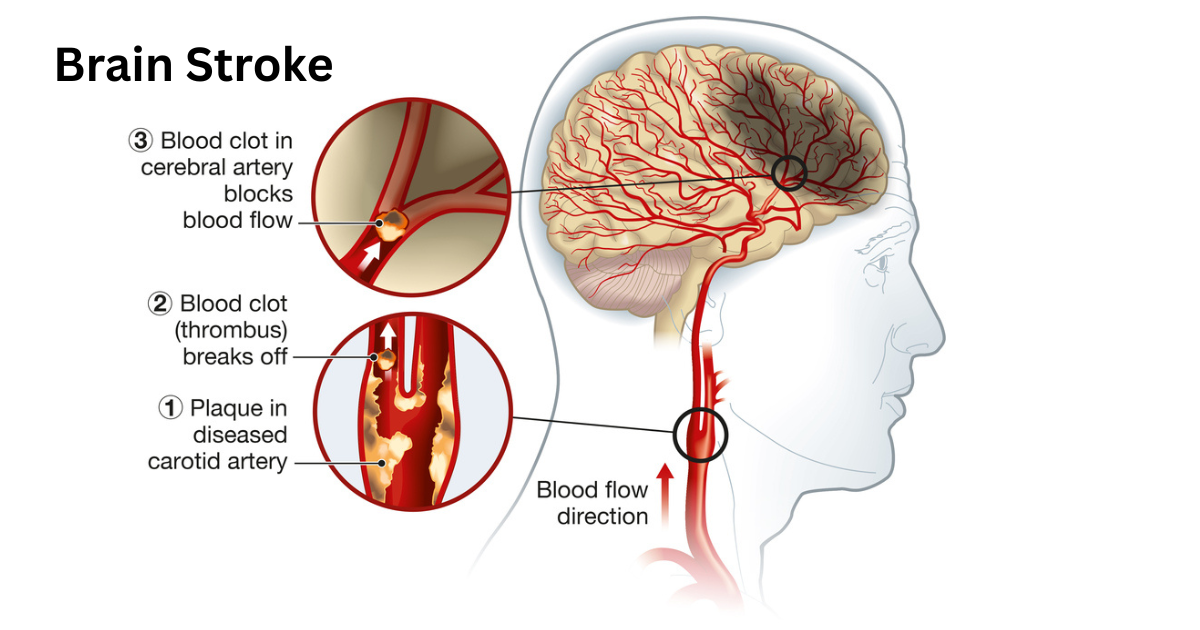
A blood clot in the brain.
How It Begins and Why It Is Missed
A brain clot does not always arrive dramatically. It doesn’t always look like a collapse or a stroke on day one.
Sometimes it begins quietly. A slight confusion. A missed word. A moment where balance feels off. Something you dismiss because it passes.
But inside, the brain is already under stress.
When a clot blocks blood flow, oxygen supply drops. And the brain does not tolerate that well. Within minutes, cells begin to get injured. Not all damage is immediate or obvious, but it builds. And when it crosses a threshold, what is lost does not come back easily.
That is the part most people don’t see. They only see the outcome.
Why Kambli ‘s Story Feels Familiar
What makes this situation uncomfortable is not that it is rare. It is that it is becoming familiar.
In many cases, the clot is detected late. By then, treatment is no longer about reversing the problem. It is about limiting what is left to lose.
That is when patients start living with consequences instead of recovering from a condition.
Memory issues, speech problems, imbalance, weakness. The brain shows injury in different ways depending on where the blood flow was blocked.
In Kambli’s case, it appears to be memory. In someone else, it could be movement. In another, speech.
The clot is the same. The outcome varies.
This Is Increasing, Not Occasional
India is seeing a steady rise in stroke and brain clot cases. Nearly 1.8 million people are affected every year. What used to be seen as an older person’s condition is now being diagnosed much earlier.
Part of this is lifestyle. Hypertension, diabetes, smoking, and long sedentary hours all play a role.
But there is another shift that is less talked about.
Hormonal influence.
The New Risk We Are Beginning to Notice
In recent years, there has been a visible increase in clotting risk linked to hormonal use, especially in women.
Oral contraceptive pills, hormone-based treatments, and even practices like delaying or suppressing periods for convenience are becoming more common. Travel, work schedules, events, or personal choice are driving these decisions.
But the body doesn’t see it as a convenience. It sees it as hormonal alteration.
Estrogen, particularly in certain contraceptive pills, can increase the tendency of blood to clot. In most healthy individuals, the risk remains low. But when combined with other factors like smoking, dehydration, long travel, or genetic predisposition, that risk starts to rise.
There have been reported cases in India where young women, otherwise healthy, presented with clot-related complications after prolonged or unsupervised hormonal use.
Not because the medication is inherently unsafe.
But because it was used without understanding the full picture.
Stopping periods is not just a lifestyle adjustment. It is a physiological intervention. And like any intervention, it needs context, assessment, and supervision.
It Is Not Just Women
There is a tendency to link clot risk only with female hormones. That would be incomplete.
In men, different patterns are emerging.
Certain supplements, performance enhancers, and even hormone-related therapies can influence clotting. Lifestyle factors like smoking, alcohol, stress, and long hours of inactivity play a stronger role.
Long-distance travel, especially flights where people remain seated for hours, adds to the risk. Dehydration during summer worsens it further.
Even something as common as ignoring hydration or pushing through fatigue can become a contributing factor when layered with other risks.
So while the triggers may differ, the end result can be similar.
A clot that should not have formed, forming anyway.
The Problem Is Not Just the Clot
The real issue is delay.
By the time symptoms are taken seriously, the window for early intervention is often gone.
What could have been managed becomes something that has to be lived with.
That is why awareness matters more than fear.
Recognizing early signs changes outcomes.
What Should Not Be Ignored
A sudden change in clarity
Difficulty finding words
Unusual headaches
Brief episodes of imbalance
Weakness, even if it lasts minutes
These are not random events.
They are signals.
And the mistake most people make is waiting for them to repeat or worsen before acting.
A Reality We Need to Accept
Not every headache is serious.
Not every dizzy spell is a clot.
But some are.
And the cost of missing those few is high.
Where Timely Care Makes the Difference
When it comes to the brain, time is not a comfort. It is a factor that decides outcome.
At Omega Hospitals Center for Neurosciences, the focus is on early recognition and rapid evaluation.
Advanced imaging, neurological assessment, and coordinated care help identify whether it is a simple issue or something more serious like a clot.
Because the goal is not just treatment.
It is preventing loss.
The Takeaway
Vinod Kambli’s story is not just about memory loss.
It is about what happens when something silent is missed.
A brain clot rarely announces itself loudly at the start.
It begins quietly. Progresses silently.
And by the time it is understood, it often leaves something behind.
If something feels off, even briefly, it is worth checking.
Because with the brain, waiting is not neutral.