

You may be used to thinking of sleep as something you catch up on after a busy day. Late-night work, scrolling on your phone, stress about tomorrow, or simply staying awake because there is too much to finish can slowly become routine. But when poor sleep becomes a regular pattern, it can affect your heart too.
Sleep and heart health are closely related. Good sleep allows the body time to recover, but repeated loss of sleep can affect blood pressure, blood sugar, weight, stress levels and other factors linked to cardiovascular disease.
How Does Sleep Affect Your Heart?
During healthy sleep, the body enters a period of rest and recovery. Blood pressure normally falls during sleep. When sleep is regularly interrupted or insufficient, this recovery may be affected.
Sleep deprivation and heart health are particularly important when short sleep continues over time. Research has linked insufficient or poor-quality sleep with high blood pressure, obesity, diabetes and other cardiovascular risk factors.
It is also not just about the number of hours. Frequent awakenings, inconsistent sleep timings, difficulty falling asleep or waking up feeling unrefreshed can all impact sleep quality and heart health. Current evidence suggests that healthy sleep involves adequate duration, regular timing and uninterrupted, restorative sleep.
Where Does Stress Fit In?
Stress and sleep are often connected.
Sleep deprivation can leave you feeling tired, irritable and less able to cope with the pressures of the next day. Chronic stress may also elevate heart rate and blood pressure.
This is not to say that a stressful or late night will cause heart disease. The worry is when stress, lack of sleep and bad habits become a long-term pattern.
Signs Your Sleep May Need Attention
Pay attention if you regularly experience:
- Trouble falling asleep or staying asleep
- Waking up several times during the night
- Feeling tired despite spending enough time in bed
- Excessive daytime sleepiness
- Loud snoring
- Waking up gasping or choking
- Headaches in the Morning
- Difficulty concentrating during the day
- Persistent stress or difficulty relaxing at bedtime
Loud snoring, pauses in breathing or gasping during sleep can be signs of sleep apnea, a condition that has been linked to high blood pressure, stroke and coronary artery disease.
Who Should Pay Extra Attention?
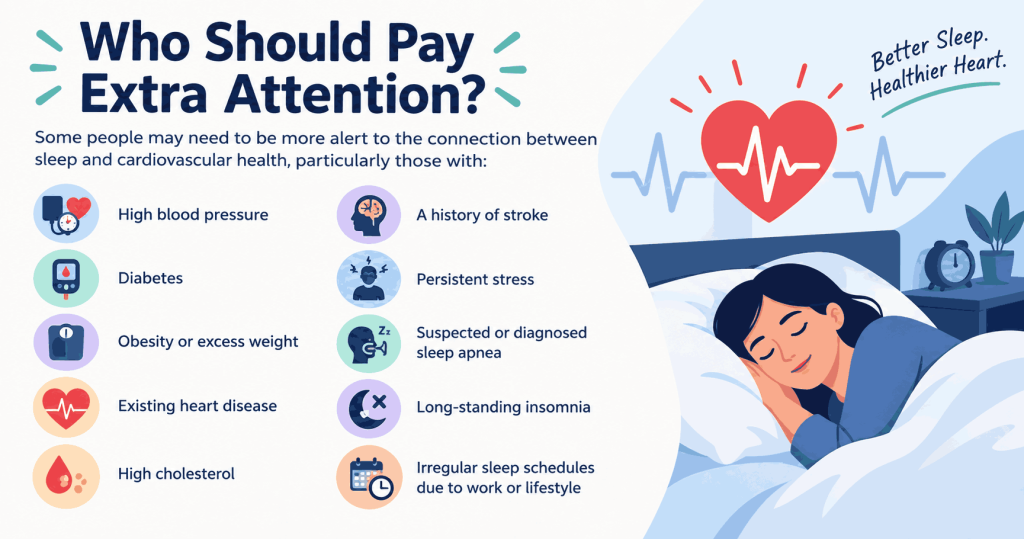
Having one of these risk factors does not mean that heart disease will develop. However, it makes regular health assessment and healthy sleep habits more important.
When Should You See a Doctor?
Do not ignore persistent sleep problems simply because they seem like a lifestyle issue.
Consider speaking with a doctor if sleep problems continue for several weeks, affect your daytime activities or leave you constantly tired. Medical advice is especially important if you snore heavily, stop breathing during sleep, wake up gasping, or have high blood pressure or an existing heart condition.
If you develop chest pain or pressure, severe breathlessness, fainting, sudden weakness or other symptoms suggestive of a heart emergency, seek emergency medical care rather than assuming they are related to stress or lack of sleep.
How Are Sleep and Heart Problems Evaluated?
There is no single test that determines whether poor sleep is affecting your heart.
Based on symptoms and medical history, a doctor may evaluate:
- BP (Blood Pressure)
- Cholesterol and Blood sugar
- Weight and other risk factors for cardiovascular disease
- Sleep pattern and daily routine
- Snoring and breathing symptoms
- Existing heart symptoms or conditions
A sleep study might be advised if there is suspicion of sleep apnea. This could assist in identifying abnormal breathing and sleep disruptions. When there are cardiovascular concerns, your doctor may also recommend appropriate cardiac evaluation based on your symptoms and risk profile.
How Sleep Problems Can Be Managed
Going to bed earlier doesn’t always mean better sleep. The right approach depends on what is affecting your sleep initially.
| Sleep or Health Concern | What May Help |
|---|---|
| Poor sleep habits or stress | Simple changes to your sleep routine, reducing stress, and creating a relaxing bedtime environment may help improve sleep. |
| Long-term insomnia | If trouble sleeping continues, a healthcare professional can help identify the cause and recommend appropriate treatment. |
| Sleep apnea | Treatment may include CPAP therapy, lifestyle changes, weight management, or other options, depending on the person’s condition and needs. |
| High blood pressure | Getting a sound sleep and keeping BP under control are both important for overall heart health. |
| Diabetes | Managing sleep problems and controlling blood sugar levels can help support good overall health. |
| Obesity or excess weight | Healthy weight management may promote sleep and cardiovascular health, especially if sleep apnea is involved. |
| Existing heart disease | Heart disease and other sleep problems may need to be addressed together rather than treated as separately. |
| Multiple health conditions | When several factors are involved, working with the appropriate healthcare professionals can help create a coordinated treatment plan. |
How Much Sleep Should You Aim For?
A minimum of 7 hours of sleep per night is a must and should. But the objective isn’t simply to reach a number on the clock. Maintaining consistent sleep timings and good quality, uninterrupted sleep are also important for overall cardiovascular health.
Simple Ways to Protect Your Sleep and Heart
- Ensure that you get a minimum of 7 hours of sleep each night.
- Get some natural light during daytime
- Practice physical activity.
- Decrease bright screens and stimulating activities before bedtime.
- Do not eat heavy meals close to bedtime.
- Make sure your sleep area is quiet, dark, and cozy.
- Don’t ignore persistent snoring or repeated nighttime awakenings.
- Instead of letting stress become part of your nightly routine, tackle it.
Don’t Treat Sleep as Something You Can Always Catch Up On
A busy schedule can make sleep seem optional, but regularly cutting on sleep could have consequences for cardiovascular health. Poor sleep and heart disease are linked by several risk factors, including blood pressure, metabolic health, stress and sleep disorders.
Omega Hospitals provides Cardiology services for evaluation and management of a variety of heart related concerns, with cardiac diagnostic and treatment facilities. Sleep-related concerns often occur along with cardiovascular risk factors, and coordinated medical assessmentcan offer a way to appropriately address both areas of health.
Take the First Step Towards Better Heart Health
If persistent sleep problems, stress or cardiovascular risk factors are affecting your daily life, consult a cardiologist at Omega Hospitals for an appropriate evaluation and personalized medical guidance.
Your sleep is part of your heart health. Don’t keep putting it off.