

When temperatures climb during the summer months, hospitals across the country witness a predictable pattern. Emergency rooms see a surge in patients experiencing severe pain that many describe as worse than childbirth. The culprit? Kidney stones in summer. Research shows that kidney stone cases increase by 20 to 30% during peak summer months, according to medical studies published in nephrology journals. With approximately 12% of India’s total population anticipated to develop kidney stone disease in their lifetime, as reported by a study in Rajasthan, understanding the connection between summer heat and kidney stones becomes critical for prevention.
To understand more about early warning signs, read about early signs of kidney disease in India.
The Summer Heat and Kidney Stone Connection
The relationship between hot weather and kidney stones centers on one primary factor: dehydration and its impact on how your kidneys function.
The Summer Heat and Kidney Stone Connection
Increased Fluid Loss
- Hot weather causes excessive sweating
- Your body prioritizes cooling itself over urine production
- Fluid loss reduces urine volume, increasing risk of kidney stones in summer
Concentrated Urine
- Less water in your system means more concentrated urine
- Minerals like calcium, oxalate, and uric acid become highly concentrated
- These minerals are the main causes of kidney stone formation
Crystal Development
- When urine volume decreases, minerals don’t dissolve properly
- Instead, they form tiny crystals, leading to kidney stones during summer
- These crystals attract other elements and grow into stones
Understanding Kidney Stones: What Forms Inside Your Kidneys
Kidney stones are hard deposits made of minerals and salts that form inside your kidneys. They range in size from tiny grains of sand to objects larger than a golf ball.
For a complete overview, read kidney stones explained in detail.
The Summer Heat and Kidney Stone Connection
| Stone Type | Percentage | Primary Cause |
|---|---|---|
| Calcium Oxalate | 75–80% | Most common type of kidney stones |
| Uric Acid | 10–15% | Linked to high-protein diets and dehydration |
| Struvite | 5–10% | Caused by urinary tract infections |
| Cystine | Less than 1% | Rare, genetic condition |
Source: Studies from Tamil Nadu and Rajasthan medical research
Research from Tamil Nadu indicates calcium oxalate stones are the predominant type found in Indian patients, accounting for the vast majority of cases.
Kidney Stone Symptoms: Signs You Should Not Ignore
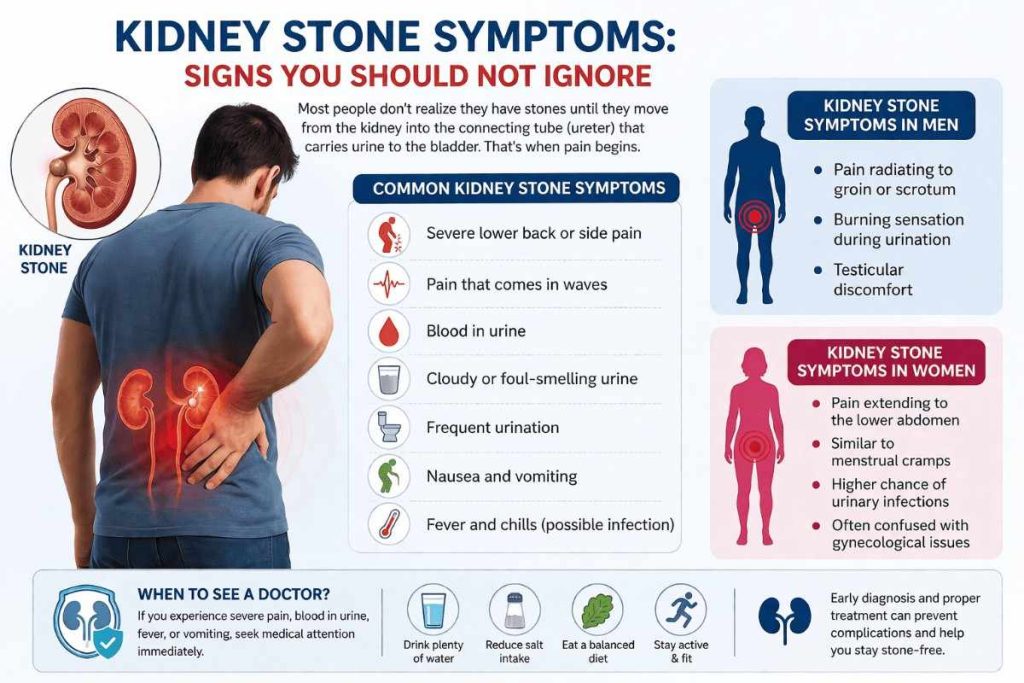
Most people don’t realize they have stones until they move from the kidney into the connecting tube (ureter) that carries urine to the bladder. That’s when pain begins.
Common Kidney Stone Symptoms
- Severe lower back or side pain
- Pain that comes in waves
- Blood in urine
- Cloudy or foul-smelling urine
- Frequent urination
- Nausea and vomiting
- Fever and chills (possible infection)
Kidney Stone Symptoms in Men
- Pain radiating to groin or scrotum
- Burning sensation during urination
- Testicular discomfort
Kidney Stone Symptoms in Women
- Pain extending to the lower abdomen
- Similar to menstrual cramps
- Higher chance of urinary infections
- Often confused with gynecological issues
Indian Population Data: Studies from Tamil Nadu show that among 150 kidney stone patients, 56% were women and 44% were men, with the highest incidence in the 21-60 age group (46% of cases).
How to Prevent Kidney Stones in Summer
Preventing kidney stones in hot weather is easier than treating them.
1. Hydration Tips to Prevent Kidney Stones
- Drink 2–3 liters of water daily
- Increase intake in hot climates like India
- Maintain light-colored urine
Best drinks for kidney stone prevention:
- Water
- Lemon water (rich in citrate)
- Coconut water
Avoid excessive tea, coffee, and sugary drinks to reduce kidney stone risk.
2. Kidney Stone Diet for Indian Patients
Diet plays a major role in prevention. Learn more about foods that cause kidney stones and what to avoid.
Reduce Sodium Intake
- Limit salt to under 2,000 mg/day
- High sodium increases calcium in urine
Maintain Adequate Calcium
- Do not avoid calcium
- Include milk, curd, paneer, and ragi
Balance Protein Intake
- Limit red meat and animal protein
- Prefer plant-based protein like dals
Manage Oxalate Foods
- Spinach, nuts, beetroot in moderation
- Combine with calcium-rich foods
Foods to Avoid to Prevent Kidney Stones
High-Sodium Items:
- Packaged chips and namkeen
- Pickles and chutneys
- Canned soups and vegetables
- Soy sauce and commercial sauces
- Fast food and restaurant meals
High-Oxalate Foods (eat in moderation, don’t eliminate):
- Spinach (palak) and amaranth greens
- Beetroot and beet greens
- Nuts, especially almonds and cashews
- Chocolate and cocoa
- Strong black tea in large quantities
Other Risk Factors:
- Sugary sodas and cold drinks
- Excessive meat and seafood
- Alcohol (increases dehydration)
Foods That Help Prevent Kidney Stones:
- Citrus fruits: lemon, orange, sweet lime
- High water content: watermelon, cucumber, tomato
- Vegetable juices and fresh fruits
- Whole grains: brown rice, whole wheat
- Low-fat dairy products
Kidney Stone Treatment Options in Hyderabad
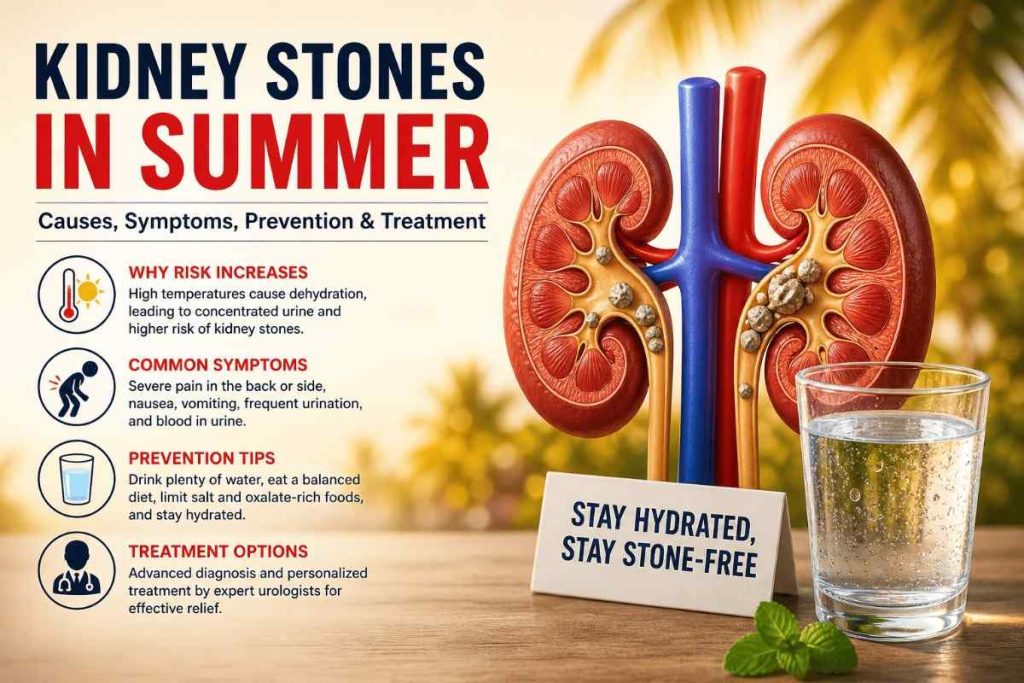
Small stones (less than 4mm) often pass naturally with increased water intake and pain management. Larger stones require medical intervention.
Learn more about advanced procedures for kidney stone treatment and surgical approaches available.
When Conservative Treatment Works:
- Stones smaller than 4 to 5mm
- No signs of infection
- Manageable pain
- The patient can drink adequate fluids
Medical Procedures for Larger Stones:
| Treatment | Best For | How It Works |
|---|---|---|
| Shock Wave Therapy | Stones 5–20mm | Sound waves break stones into smaller pieces |
| Ureteroscopy | Stones in the ureter | Small scope removes or breaks stones |
| Laser Treatment | Various sizes | Precise laser breaks stones |
| Surgical Removal | Very large stones | Direct removal through a small incision |
When to See a Kidney Stone Specialist (Urologist):
Consult an experienced urologist for kidney stones if you experience:
- Severe pain
- Blood in urine
- Fever or infection
- Persistent vomiting
- Recurrent kidney stones
Best Urology Care for Kidney Stones in Hyderabad
Choosing the right urology specialist makes a significant difference in both treatment effectiveness and prevention planning.
What Quality Urology Care Includes:
- Advanced diagnostic imaging (ultrasound, CT scan)
- Multiple treatment options available
- Emergency services for acute pain
- Personalized prevention programs
- Follow-up care to prevent recurrence
Omega Hospitals in Gachibowli offers comprehensive nephrology and kidney care services with experienced specialists trained in the latest kidney stone treatments. The hospital provides 24/7 emergency care for acute stone episodes, advanced diagnostic facilities, and personalized prevention strategies tailored to Hyderabad’s climate and local dietary patterns.
The Department of Urology at Omega Hospitals uses evidence-based approaches to both treat existing stones and prevent future formation through customized hydration and dietary guidance.