
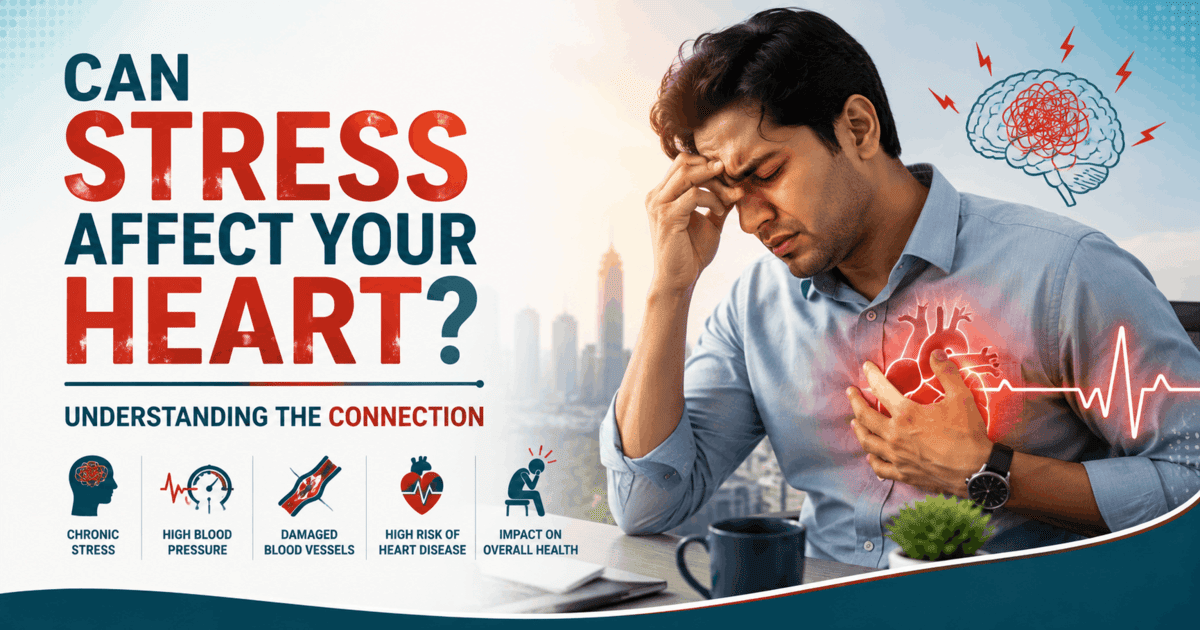
Most people accept stress as an unavoidable part of modern life, particularly in India’s fast-paced urban centres. But there is a measurable cost to carrying chronic stress, and a significant portion of that cost is paid by the heart. A 2024 meta-analysis published in ScienceDirect, covering 33 studies and 43,641 participants, found that people with higher levels of stress hormones had a 63% greater risk of cardiovascular disease than those with lower levels. A Cureus epidemiological review published in November 2024 confirmed that increased stress levels contribute significantly to India’s rising rates of stress and heart disease, alongside urbanisation and dietary shifts.
Stress and heart health are not loosely related. The connection is direct, measurable, and increasingly relevant to younger adults in India.
How Stress Affects the Heart: What Is Actually Happening
When you experience stress, your body releases two key hormones: adrenaline and cortisol. These stress hormones are appropriate in short bursts, designed to prepare the body to respond to an immediate threat. The problem arises when stress becomes chronic and these hormones stay elevated for days, weeks, or months. This is the core mechanism behind stress cardiovascular disease – a well-documented connection in a 2024 review in Nature Reviews Cardiology.
Here is what sustained stress hormones do to the cardiovascular system:
| Effect | What It Means for Your Heart |
|---|---|
| Raised heart rate, stress, and blood pressure | The heart works harder and blood vessels are under constant pressure, accelerating wear. |
| Narrowing of blood vessels | Reduces blood flow to the heart, increasing the risk of chest pain and heart attack. |
| Increased blood clotting tendency | Raises the risk of a clot forming in arteries, which can cause heart attacks or strokes. |
| Chronic low-grade inflammation | Damages the inner lining of blood vessels over time, accelerating plaque build-up. |
| Disrupted blood sugar regulation | Contributes to insulin resistance, a known risk factor for heart disease. |
| Reduced thyroid function | Chronic stress suppresses thyroid hormone conversion, which is associated with cardiac dysfunction. |
A 2024 updated review in Nature Reviews Cardiology confirmed that psychological stress cardiovascular risk is independent of other lifestyle factors — meaning stress alone raises heart disease risk factors even in otherwise healthy individuals.
Stress-Related Heart Symptoms You Should Not Dismiss
Stress produces physical symptoms that are often attributed to other causes. Some of these overlap with early cardiac warning signs and deserve proper evaluation if they are new, frequent, or worsening.
Symptoms that can result from chronic stress and may indicate cardiac involvement:
- Chest tightness, pressure, or discomfort, especially during or after stressful periods
- Heart palpitations, an awareness of the heart beating rapidly, skipping beats, or pounding
- Shortness of breath during light activity or at rest
- Persistent fatigue that does not improve with sleep – a common sign of sleep and heart health issues
- Elevated blood pressure readings – a direct result of stress and blood pressure interaction
- Frequent headaches and dizziness
- Difficulty sleeping, which itself worsens heart strain over time
When to seek immediate Cardiac care: Any chest pain, pressure, or tightness accompanied by shortness of breath, sweating, or discomfort radiating to the arm or jaw requires prompt medical evaluation. These heart attack symptoms are not to be monitored at home. Seek emergency care immediately.
Can Stress Directly Cause a Heart Attack?
Yes, in certain circumstances it can. Two well-documented conditions illustrate the stress heart attack connection directly.
Takotsubo cardiomyopathy (Broken Heart Syndrome)
Takotsubo cardiomyopathy, also called stress cardiomyopathy or broken heart syndrome, occurs when an intense episode of emotional or physical stress causes a temporary but significant weakening of the heart muscle. It mimics a heart attack in its symptoms and on tests, but typically does not involve a blocked artery. It is more common in women and in people without pre-existing heart disease.
Acute Coronary Events Triggered by Emotional Stress
Emotional stress heart attack risk is real. Research consistently shows a spike in heart attacks in the days following major stressful life events, including bereavement, job loss, and high-pressure work deadlines. The mechanism involves a sudden surge in stress hormones causing blood vessels to constrict and blood clotting to increase.
Beyond these acute events, chronic stress accelerates the progression of stress and coronary artery disease, the gradual build-up of fatty deposits in the arteries, over years. This is the more common and equally significant risk.
Practical Steps to Protect Your Heart: Stress Management for Heart Health
Manage Stress Actively for Better Heart Health:
- Aim for 7 to 8 hours of consistent sleep each night. Sleep deprivation amplifies cortisol output and directly worsens sleep and heart health.
- Practice yoga for heart health, deep breathing exercises, or mindfulness for at least 15 to 20 minutes daily.
- Limit caffeine and alcohol, both of which raise cortisol levels and disrupt sleep.
- Set boundaries around work hours, particularly for those in demanding roles with long screen time.
Monitor Your Heart Health Regularly:
- Regular monitoring is a core part of stress management for heart health. Check your blood pressure and cardiac health indicators regularly — at least once a year from the age of 25
- Request a fasting blood sugar and cholesterol test if you have been under sustained stress for several months
- Inform your doctor if you are experiencing frequent stress palpitations, chest discomfort, or persistent fatigue alongside high stress
Address the Source of Stress, Not Just the Symptoms
Stress management tools reduce the cardiovascular impact of stress but do not eliminate the underlying causes. If work, relationships, or financial pressure is chronic and unaddressed, speaking with a counsellor or mental health professional is a valid and effective part of protecting your heart from stress and heart disease.
A Quick Reference: Stress and Heart Health Summary
Here is what sustained stress hormones do to the cardiovascular system:
| Stress Effect | Cardiovascular Consequence |
|---|---|
| Raised adrenaline and cortisol | Higher heart rate and higher blood pressure |
| Chronic inflammation | Damage to blood vessel lining and faster plaque build-up |
| Increased blood clotting | Higher risk of stress-related heart attack and stroke |
| Poor sleep from stress | Further raises blood pressure and cortisol |
| Emotional shock or extreme stress | Can trigger stress cardiomyopathy or acute cardiac events |
Stress and heart health are connected in ways that are both immediate and cumulative. A single stressful episode rarely determines long-term heart health, but sustained stress over months and years leaves a measurable mark on the cardiovascular system.
The encouraging reality is that the most effective stress management for heart health interventions, regular activity, consistent sleep, social connection, and professional support, are within reach for most people.
If you have been experiencing frequent stress palpitations, elevated blood pressure, chest tightness, or unexplained fatigue alongside high levels of stress, speak with a cardiologist in Hyderabad at Omega Hospitals. A comprehensive cardiac assessment can establish your current risk level clearly and provide a personalised plan for protecting your heart for the long term. Book your cardiac assessment today.