
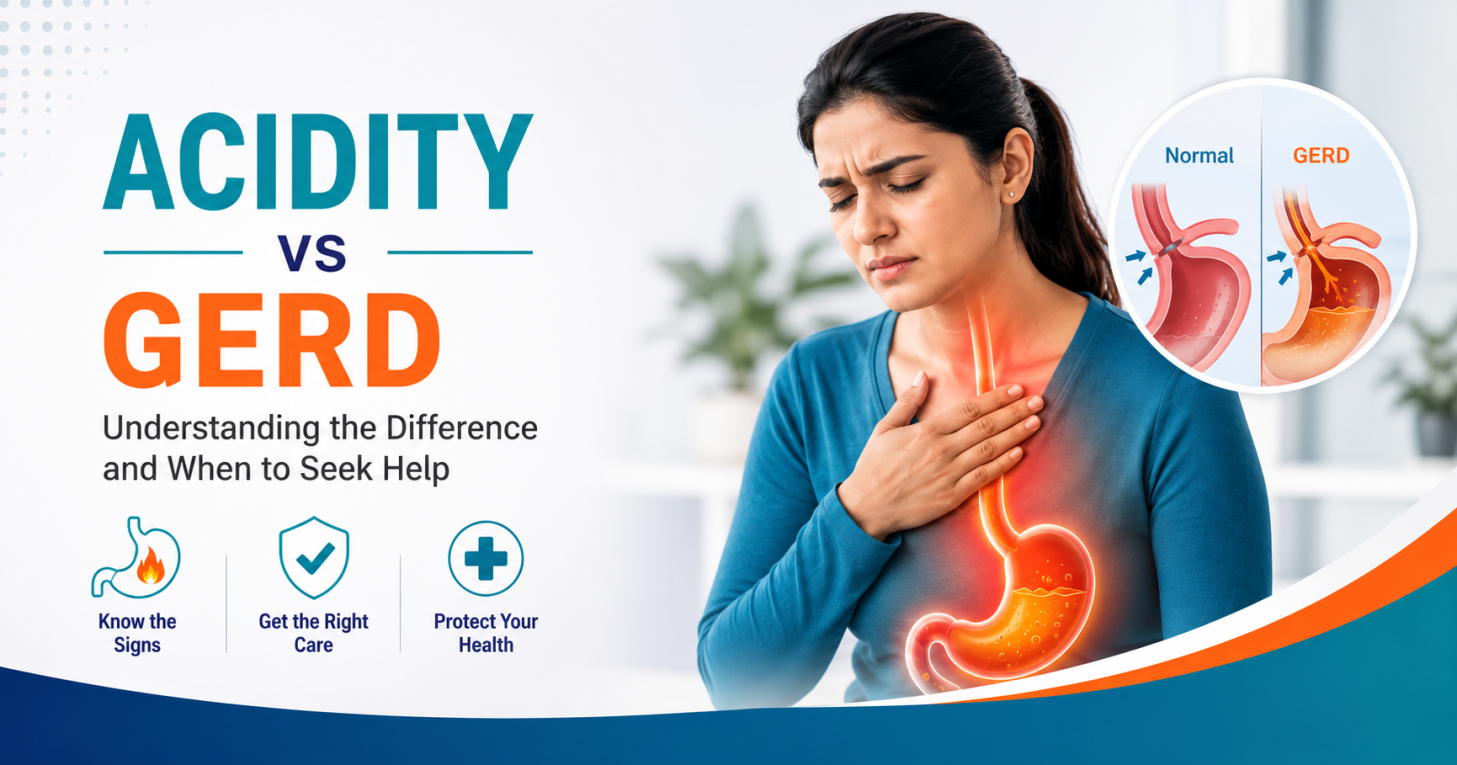
Most people have experienced a burning sensation in the chest after a heavy meal, a late dinner, or a spicy dish. Reaching for an antacid and moving on feels like the natural response. For many, that is perfectly appropriate. But for a significant number of people in India, what feels lik e routine acidity is actually gastroesophageal reflux disease (GERD), a chronic acid reflux disease that, when left unmanaged, can cause lasting damage to the food pipe and increase the risk of serious GERD complications.
Understanding the difference between occasional acidity vs GERD is not just a matter of terminology. It determines the right acidity treatment or GERD treatment and prevents long-term harm.
What Is the Difference Between Acidity vs GERD?
| Feature | Acidity (Occasional Acid Reflux) | GERD (Chronic Acid Reflux Disease) |
|---|---|---|
| Frequency | Occasional, usually linked to a specific trigger | Twice a week or more, for several weeks or longer |
| Duration | Resolves within a few hours | Persistent, often daily |
| Response to Antacids | Improves quickly | May provide only partial or temporary relief |
| Damage to the Food Pipe | None | Can damage the lining over time |
| Medical Diagnosis Needed | Not typically | Yes, requires evaluation |
| Risk of Complications | Very low | Higher without treatment |
Acidity occurs when the stomach produces excess acid or when acid briefly moves upward into the food pipe, causing a burning sensation. This is common, and occasional episodes are not a concern.
GERD is what develops when this reflux happens chronically. The lower part of the food pipe has a muscular valve – the lower oesophageal sphincter – that normally prevents stomach acid from flowing upward. In GERD, this valve is weakened or does not close properly, allowing acid to enter the food pipe and cause damage over time repeatedly.
Symptoms: Acidity vs GERD
Both conditions share some symptoms, but GERD produces a broader and more persistent pattern.
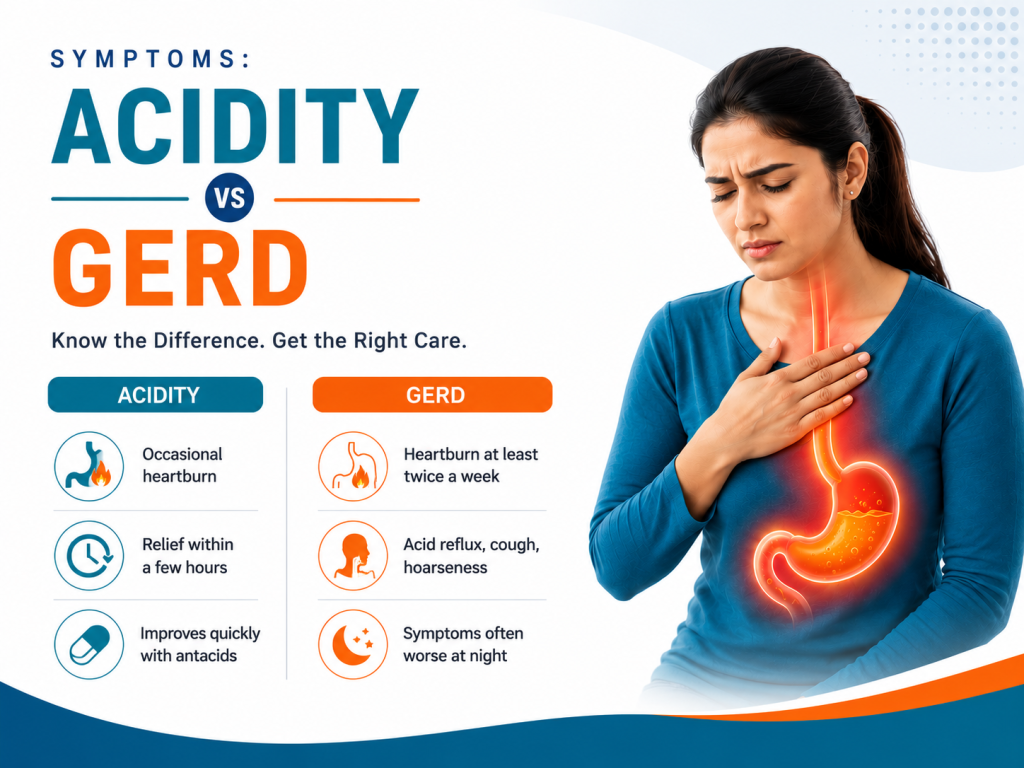
Common Symptoms of Occasional Acidit:
- Burning sensation in the chest or upper stomach – heartburn after eating a large or spicy meal
- Mild bloating or a feeling of fullness
- Slight sourness in the mouth
- Symptoms that resolve within a few hours or after an antacid
GERD Symptoms That Go Beyond Typical Acidity:
- Heartburn that occurs at least twice a week, often acid reflux at night or when lying down
- Acid or food coming back up into the throat, leaving a sour or bitter taste
- A feeling of something being stuck in the throat
- Chronic cough GERD – a persistent cough, particularly at night, not linked to a respiratory infection
- Hoarseness or a persistent change in the voice
- Difficulty swallowing, or a sensation of food moving slowly down the throat
- Worsening of asthma symptoms, since stomach acid can irritate the airways
- Chest pain that occurs without exertion and is not related to the heart
Important: Chest pain should always be evaluated medically to rule out a cardiac cause. GERD-related chest pain and cardiac chest pain can feel similar, and a doctor’s assessment is the only reliable way to distinguish them.
Risk Factors for GERD in India
The Indian Society of Gastroenterology’s consensus statement identifies the following as key GERD risk factors:
- Obesity and excess abdominal weight
- Diets high in spices, fried foods, and non-vegetarian items – spicy food acid reflux is a well-recognised trigger
- High tea and coffee intake
- Tobacco and alcohol use
- Lying down after meals – lying down within 2 hours after eating significantly increases reflux risk
- Large, late-evening meals, common in urban Indian households
- Certain medicines, including some pain relievers and blood pressure medicines
Diet plays a significant role in managing GERD risk factors. See our guide on diet recommendations for acid reflux for practical food choices that reduce symptoms.
When Untreated GERD Becomes Serious: GERD Complications
This is the most important reason not to normalise persistent acid reflux symptoms. GERD left unmanaged over months or years can lead to the following GERD complications:
Erosive Oesophagitis: Repeated acid exposure erodes the food pipe lining, causing ulcers and bleeding.
Barrett’s Oesophagus: The food pipe lining changes in response to chronic acid damage, increasing the risk of oesophageal cancer. Most people with this condition have no additional symptoms beyond GERD.
Oesophageal Stricture: Scar tissue narrows the food pipe, making swallowing progressively harder.
Chronic respiratory symptoms from GERD: Acid irritating the airways worsens asthma and causes a persistent cough linked to chronic cough GERD.
GERD Diagnosis and Treatment
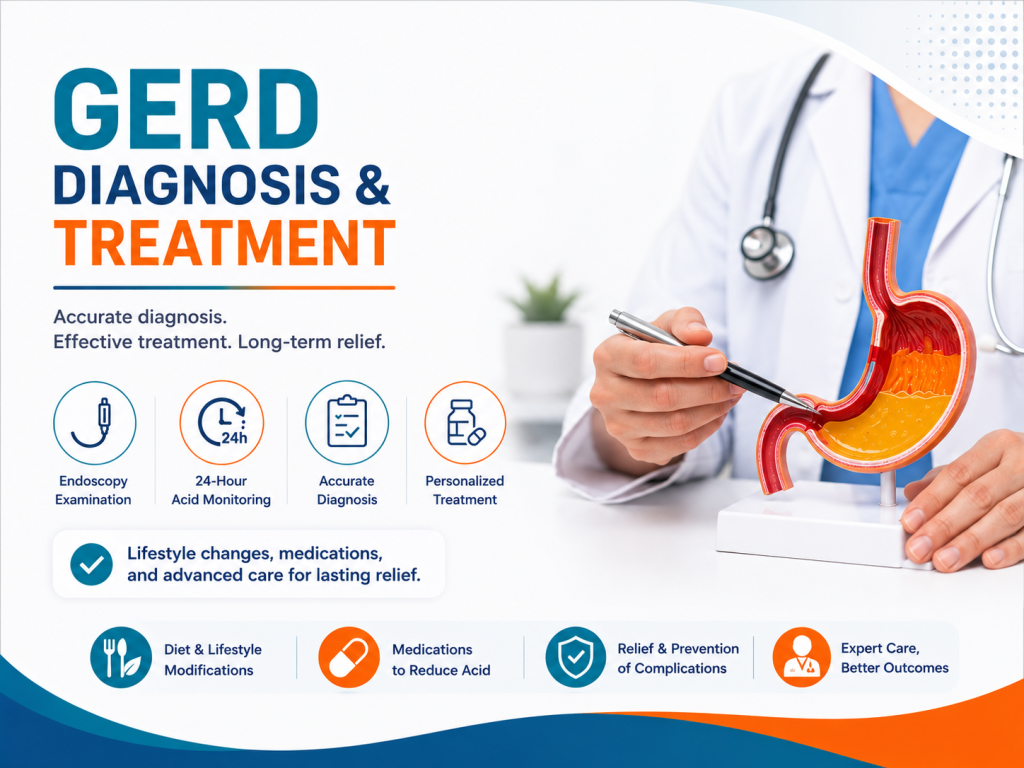
A clinical assessment, endoscopy (a camera examination of the food pipe), or a 24-hour acid monitoring test may be used to confirm GERD diagnosis and assess the extent of any damage.
GERD Treatment and Heartburn Treatment Options:
| Approach | What It Involves |
|---|---|
| Lifestyle Changes | Smaller meals, avoiding lying down for 2 hours after eating, elevating the head of the bed, and reducing trigger foods. |
| Antacids | Provide short-term relief for mild acidity but are not a long-term solution for GERD. |
| H2 Blockers | Reduce acid production and are suitable for moderate symptoms. |
| Proton Pump Inhibitors (PPIs) | The most effective GERD treatment medicines, significantly reducing acid production. |
| Acid Reflux Surgery | Reserved for cases where medicines do not provide adequate control or when there is a structural issue with the valve. |
The Indian Society of Gastroenterology recommends proton pump inhibitors (PPIs) as the first-line GERD treatment for frequent or severe GERD symptoms, with lifestyle modification as a core part of every treatment plan.
Acidity and GERD are related but meaningfully different. One is common and self-resolving. The other is a chronic acid reflux disease that causes lasting food pipe damage if not managed. The key is recognising when heartburn becomes persistent and acting before GERD complications develop.
If you experience heartburn twice a week or more, acid reflux symptoms that do not respond to antacids, or any of the warning signs above, speak with a gastroenterologist in Hyderabad at Omega Hospitals. Early GERD diagnosis and the right treatment plan protect your digestive health and significantly improve your daily quality of life. Book your appointment today.