
Every time you reach for your morning coffee, climb stairs at work, or bend down to pick up something you dropped, you rely on a hidden network of connections working silently throughout your body. Your body contains approximately 250 to 350 joints, each one a remarkable piece of biological engineering that enables movement, absorbs shock, and keeps you functioning through thousands of daily activities.
Yet most people never think about their joints until something goes wrong. Understanding how your bones and joints work together isn’t just anatomy trivia. It’s essential knowledge that can help you protect these vital structures for decades to come.
What Exactly Are Joints and Why Do They Matter?
A joint is any place in your body where two bones meet. Think of them as the connection points in your skeleton, similar to hinges on a door or joints in a wooden structure. Without these connections, your 206 bones would simply be a collection of separate pieces unable to create coordinated movement.
Three Critical Jobs Joints Perform:
- Enabling Movement: Joints create pivot points where bones can move in relation to each other, allowing you to perform everything from delicate tasks like writing to powerful movements like jumping
- Absorbing Shock: Joints act like internal cushioning. When you walk, run, or jump, they absorb force and reduce stress on your bones
- Providing Structural Support: Some joints don’t move at all but instead hold bones firmly together, creating the stable framework your body needs
Key Facts About Joint Numbers:
- Adults have approximately 206 named bones
- Total joint count ranges from 250 to 350, depending on age and definition
- Babies start with about 270 bones that fuse during growth
- This natural fusion process affectsthe total joint count throughout life
The Three Main Types of Joints
Not all joints are created equal. Your body contains three main categories based on how much they move.
1. Immovable Joints (Fixed Connections)
These joints provide strength and protection rather than movement.
Examples:
- Skull sutures that hold skull plates together
- Tooth sockets that hold teeth in the jawbones
Function: Made of thick connective tissue tightly woven together, creating protective structures like the armor around your brain.
2. Slightly Movable Joints (Limited Motion)
These joints permit limited movement and resist pulling and bending forces remarkably well.
Examples:
- Joints between the vertebral spines
- The pubic symphysis joint joining left and right pelvic bones
Function: Allow enough flexibility for bending and twisting while maintaining stability. The spine joints protect your spinal cord while enabling movement. The pelvic joint provides slight mobility that becomes especially important during childbirth.
3. Freely Movable Joints (Full Range Connections)
These are the joints you’re most aware of in daily life, including your knees, shoulders, elbows, and hips. They feature a sophisticated design that allows extensive movement.
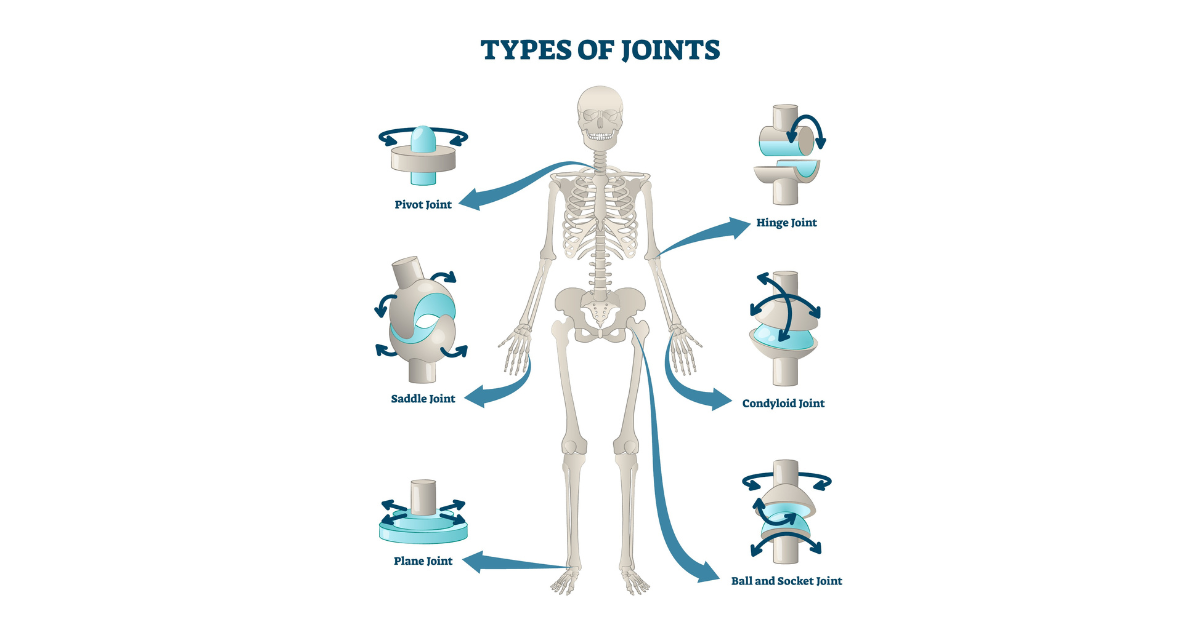
Six Types of Movable Joints:
| Joint Type | Body Examples | What It Does |
|---|---|---|
| Ball and Socket | Shoulder, hip | Moves in all directions plus rotation |
| Hinge | Knee, elbow, fingers | Opens and closes in one direction |
| Pivot | Neck (top vertebrae) | Rotates in place |
| Saddle | Thumb base | Moves in multiple directions except for full rotation |
| Condyloid | Wrist | All directions except full 360-degree rotation |
| Planar | Wrist to forearm, between vertebrae | Sliding motion without rotation |
Inside a Movable Joint: The Parts That Make Movement Possible
Understanding the anatomy of movable joints helps explain why proper care matters so much.
Essential Joint Components:
Smooth Lining (Articular Cartilage)
- Slippery, smooth tissue that lines your joints and caps bone ends
- Made primarily of water and special proteins
- Reduces friction so bones slide past each other smoothly
- Absorbs force to protect bones from impact
Joint Lubricant (Synovial Fluid)
- Clear, sticky fluid that lubricates the joint
- Works like oil in an engine
- Delivers nutrients to cartilage, which lacks its own blood supply
Protective Covering (Joint Capsule)
- Tissue membrane that lines the joint and seals it into a protective capsule
- Keeps lubricating fluid where it belongs
- Maintains joint stability
Support Bands (Ligaments)
- Tough, elastic bands of tissue surrounding the joint
- Provide support and limit excessive movement
- Connect bones to other bones
Movement Connectors (Tendons)
- Attach muscles to bones on each side of a joint
- Enable muscle contractions that create movement
Friction Reducers (Bursae)
- Fluid-filled sacs are positioned between bones, ligaments, and other structures
- Reduce friction in high-stress areas
Why Joint Lining Deserves Special Attention
The smooth lining in your joints, called cartilage, performs multiple critical functions. It resists compression, enhances bone resilience, and provides support where flexibility is needed. However, cartilage faces unique challenges.
Critical Cartilage Facts:
Lacks Blood Supply
- Once formed, cartilage has no direct blood flow
- Nutrients move mainly through diffusion from nearby tissues
- This is why cartilage heals very slowly after injury
- Lack of blood flow is the main reason cartilage injuries take months or years to heal
Has No Nerve Endings
- Cartilage itself cannot feel pain when damaged
- Pain comes from surrounding structures like inflamed bones and joints
- By the time you feel discomfort, cartilage damage may already be significant
- This makes prevention especially important
Common Questions About Joint Health
Does Cracking Joints Cause Arthritis?
Many people worry that cracking their knuckles or other joints will lead to arthritis. Current research doesn’t support this concern.
- The popping sound comes from gas bubbles in joint lubricant
- It’s not caused by bone or cartilage damage
- However, excessive or forceful joint manipulation can potentially strain surrounding support bands
- Moderation is still wise
How Joints Change With Age and Activity
Age-Related Changes:
- Joint lining can break down over time
- Reduced cushioning and lubrication eventually lead to pain and inflammation
- Wear and tear affects everyone differently based on genetics, activity level, previous injuries, and overall health
The Activity Paradox:
- Movement promotes blood flow to connective tissue within joints
- Without movement, shock-absorbing capacity begins to diminish
- Joint pain makes people want to move less
- Inactivity actually worsens joint health over time
- This creates a challenging cycle that requires active management
Protecting Your Joints: Practical Steps You Can Take Today
1. Stay Active
- Regular movement keeps joint lubricant circulating
- Maintains cartilage health through nutrient delivery
- Best activities: walking, swimming, cycling, gentle strength training
2. Maintain a Healthy Weight
- Extra body weight increases stress on weight-bearing joints
- Knees and hips bear the most burden
- Even modest weight loss significantly reduces joint strain
3. Build Supporting Muscles
- Strong muscles around joints provide stability
- Muscle tissue absorbs some force that would otherwise stress joint structures
- Reduces wear and tear on joint components
4. Practice Proper Posture
- Good positioning during sitting, standing, and lifting
- Reduces unnecessary joint stress throughout the day
- Prevents uneven wear on joint surfaces
5. Listen to Your Body
- Sharp pain warrants attention
- Persistent aching needs evaluation
- Swelling or reduced range of motion requires professional assessment
- Early intervention often prevents more serious problems
When Joint Pain Signals a Problem
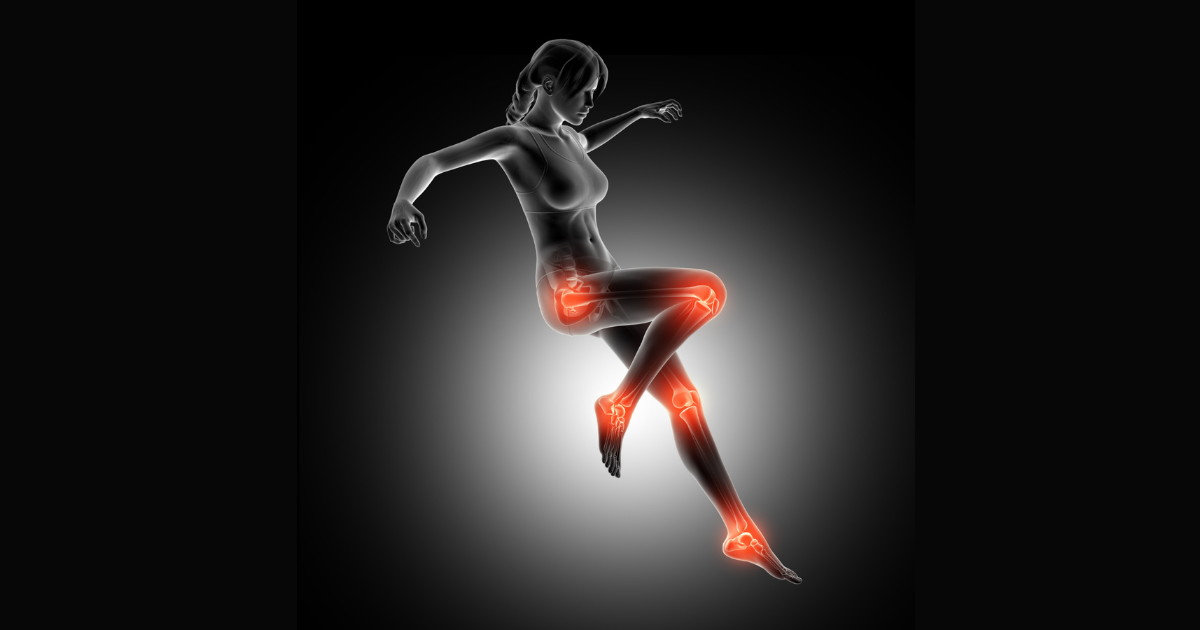
The most common joint condition is osteoarthritis, where the smooth lining becomes thinned and wears away. This ultimately results in decreased range of motion, bone contact within the joint, and pain. This condition affects millions of people, particularly those over 55.
Warning Signs That Need Professional Evaluation:
| Symptom | What It Means |
|---|---|
| Pain lasting more than a few days | Possible inflammation or structural damage |
| Swelling is not improving with rest and ice | Ongoing joint irritation requiring assessment |
| Difficulty bearing weight or using the joint | Potential significant damage |
| Stiffness worsening after inactivity | Common arthritis pattern needing evaluation |
| Reduced range of motion compared to the opposite side | Structural limitation requiring diagnosis |
| Joint instability or giving way | Support structure weakness needing treatment |
Your Joints Are Built to Last, With Proper Care
Your skeletal system represents remarkable natural engineering. The estimated 250 to 350 joints throughout your body work together seamlessly, enabling everything from breathing to running marathons.
Joint Type Summary:
- Fixed joints provide stability and protection
- Slightly movable joints offer flexibility with strength
- Freely movable joints enable the full range of daily activities
What Determines Long-Term Joint Health:
- Activity level and exercise choices
- Body weight and nutrition
- Posture and movement patterns
- Response to early warning signs
- Professional care when needed
Understanding joint anatomy empowers you to make informed decisions about protecting these vital structures. The choices you make today, from staying active to maintaining a healthy body weight, directly impact your joint health for years to come.
Take the Next Step Toward Better Joint Health
If you’re experiencing joint pain, stiffness, or reduced mobility, a professional evaluation provides clarity and direction. Don’t wait for symptoms to worsen.
The orthopedic specialists at Omega Hospitals’ Orthopedics Clinic can evaluate your joint health, identify underlying issues, and develop personalized treatment plans to help you maintain an active, comfortable life.