
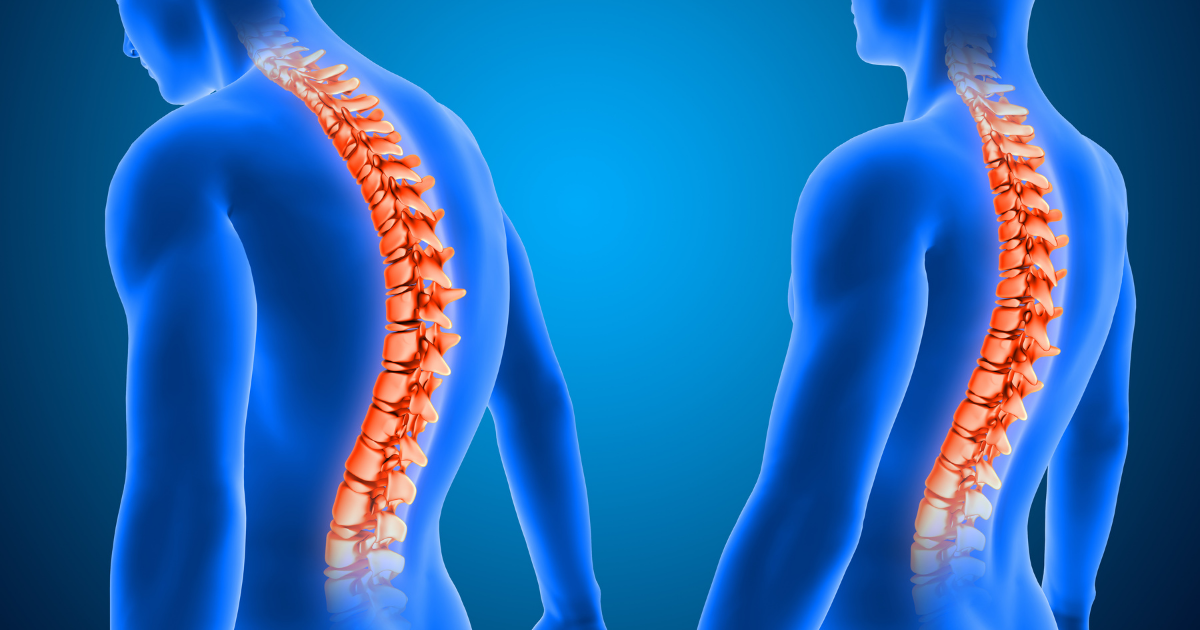
You reach down to tie your shoes, twist to grab your bag from the back seat, and bend forward to hug a loved one, all without a second thought. Yet behind these everyday movements lies one of your body’s most remarkable structures: your spine.
This incredible column of bones, discs, and nerves supports your entire body weight, protects your central nervous system, and enables the fluid movement you often take for granted. Understanding how your spine works isn’t just fascinating. It’s the first step toward keeping it healthy for decades to come.
The Spine’s Blueprint: More Than Just Your Backbone
Your spinal column consists of 33 individual bones called vertebrae, stacked like architectural blocks from the base of your skull to your tailbone. Think of it as nature’s engineering marvel, strong enough to support your body weight yet flexible enough to allow you to bend, twist, and move in multiple directions.
Key Components of Your Spine:
- Vertebrae: 33 individual bones that form the spinal column
- Discs: Cushiony pads between most vertebrae that absorb shock
- Spinal Canal: A Protected tunnel running through the center of the vertebrae
- Spinal Cord: A Bundle of nerves transmitting messages between the brain and the body
Between most vertebrae sit cushiony discs made of tough outer cartilage and a gel-like center. These discs act as shock absorbers, protecting your vertebrae from the constant impact of walking, running, and jumping. Without them, every step would send a jarring impact through your skeleton.
Running through the center of this bony column is the spinal canal. This protected tunnel houses your spinal cord, a vital bundle of nerves that serves as your body’s information pathway. It transmits messages between your brain and every part of your body at remarkable speed.
The Five Regions: Each With Its Own Job
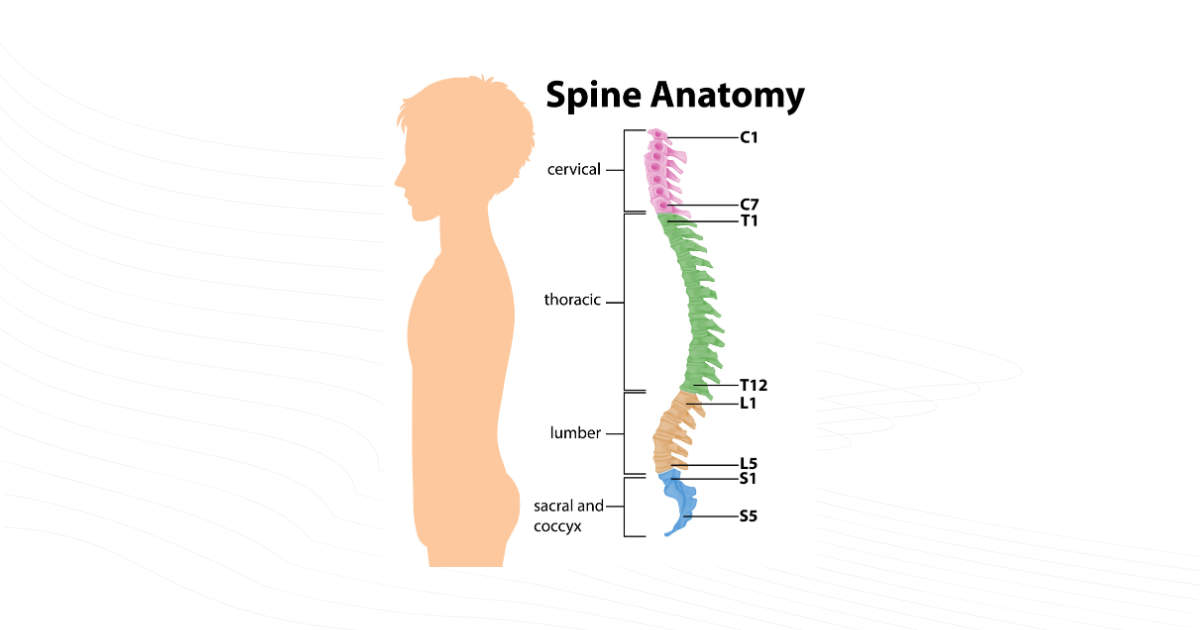
Your spine divides into five distinct regions, each designed for specific functions and movements.
Cervical Spine (Neck Region)
Location: The seven vertebrae in your neck
Primary Function: Maximum flexibility and head support
What It Does:
- Allows you to nod, turn your head, and look in all directions
- Supports your skull’s weight (approximately 10 to 12 pounds)
- Houses the top two specially shaped vertebrae that enable head rotation
Common Issues: Strain from forward head posture, particularly from smartphone and computer use
Thoracic Spine (Mid-Back Region)
Location: Twelve vertebrae in your mid-back
Primary Function: Stability and organ protection
What It Does:
- Connects to your rib cage at each vertebra
- Protects vital organs like your heart and lungs
- Provides structural support with limited flexibility
Why It Matters: This region experiences less pain than other areas because it’s designed for stability rather than movement.
Lumbar Spine (Lower Back Region)
Location: Five large vertebrae in your lower back
Primary Function: Weight-bearing and major movement
What It Does:
- Carries the heaviest load in your spine
- Enables bending forward, backward, and twisting
- Supports your upper body weight during all activities
Important Statistics: Lower back pain affects approximately 80% of adults at some point in their lives, largely due to the stress this region handles daily.
Sacrum (Pelvic Connection)
Location: Triangular bone at the base of your spine
Primary Function: Weight distribution from the spine to the legs
What It Does:
- Formed by five fused vertebrae
- Connects your spine to your pelvis
- Distributes upper body weight to your hips and legs
Coccyx (Tailbone)
Location: Very bottom of your spine
Primary Function: Muscle and ligament attachment
What It Does:
- Consists of three to five fused vertebrae
- Provides attachment points for pelvic floor muscles
- Supports sitting posture
The Supporting Cast: What Holds Everything Together
Your vertebrae and discs don’t work alone. Several other structures make spinal movement and stability possible.
Ligaments:
- Strong bands of tissue connecting vertebrae
- Run along the entire length of your spine
- Prevent excessive movement that could cause injury
Muscles:
- Multiple groups surrounding your spine
- Work together to maintain posture and enable movement
- Include core muscles that act as natural support
Nerve Roots:
- Branch off from the spinal cord at each level
- Exit through small openings in the vertebrae
- Carry messages between your brain and body parts
When these structures are healthy and balanced, your spine functions smoothly. When muscles are weak or a disc presses on a nerve, you may experience pain, numbness, or weakness in specific areas.
Your Spine’s Natural Curves: Built-In Design Features
A healthy spine isn’t perfectly straight. When viewed from the side, it has three natural curves that form an elongated S-shape.
The Three Curves:
- Cervical Curve (neck): Curves slightly inward
- Thoracic Curve (mid-back): Curves slightly outward
- Lumbar Curve (lower back): Curves slightly inward
Why These Curves Matter:
- Distribute weight evenly across the spine
- Absorb shock during movement
- Maintain balance and alignment
- Reduce stress on individual vertebrae
Problems occur when these curves become too pronounced or too flat. Excessive inward curve creates a swayback appearance, while excessive outward curve causes a rounded, hunched posture. Both conditions can lead to pain and reduced flexibility.
How Your Spine Enables Daily Movement
Understanding spinal function helps explain why certain activities cause discomfort or why specific exercises help.
Common Activities and Spinal Involvement:
| Activity | Primary Spinal Region | What Happens |
|---|---|---|
| Looking over the shoulder | Cervical spine | Rotation of neck vertebrae |
| Bending to pick up objects | Lumbar spine | Forward flexion with disc compression |
| Deep breathing | Thoracic spine | Rib cage expansion and contraction |
| Sitting for long periods | Lumbar and sacrum | Sustained compression and pressure |
| Twisting motions | Lumbar spine | Rotational stress on discs |
This table illustrates why certain positions or movements may cause discomfort if your spine isn’t properly supported or conditioned.
Protecting Your Spine Starts With Understanding It
Now that you understand your spine’s anatomy, you can make informed decisions about protecting it.
Practical Steps for Spinal Health:
- Maintain proper posture to preserve natural curves
- Strengthen core muscles for better support
- Stay active with regular movement throughout the day
- Avoid remaining in one position for extended periods
- Use proper lifting techniques when handling objects
Your spine has carried you through every moment of your life, literally supporting you in everything you do. Taking time to understand its structure and function empowers you to care for it properly.
When to Seek Professional Guidance
If you’re experiencing persistent back or neck pain or if you have questions about your spinal health, consulting with a spine specialist provides clarity and direction.
At Omega Hospitals’ Spine Clinic, our team helps patients understand their unique spinal health needs and develop personalized treatment plans for lasting relief and improved quality of life.