
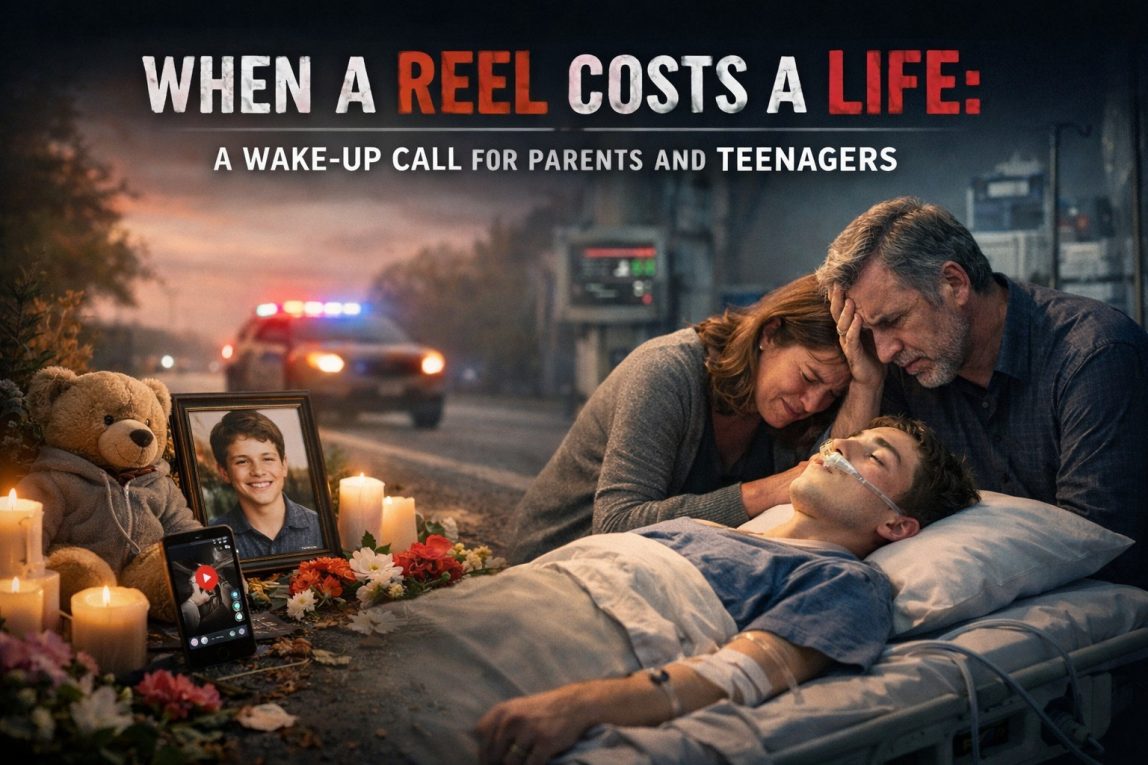
A few days ago, a heartbreaking video went viral.
A mother, in tears, said her son lost his life in an accident caused by teenagers making a social media reel while driving recklessly.
It was not just another news story.
It was a reminder.
A reminder that in today’s world, a few seconds of online attention can lead to irreversible consequences.
As a hospital that sees the emotional aftermath of such incidents, we want to speak about something deeper than road safety. We want to talk about mental health, impulsive behavior, and the growing pressure to seek validation online.
Because this is not just about one accident.
It is about a pattern we are seeing more often.
The Pressure to Be Seen
Today’s teenagers are growing up in a world where their social presence feels as important as their real life.
Likes, shares, comments, and followers have become a measure of confidence and social status. Many young people feel:
- “If I don’t post, I’ll be forgotten.”
- “If I don’t take risks, my content won’t get views.”
- “Everyone else is doing it.”
This constant need to be noticed creates silent pressure.
And sometimes, that pressure pushes them to do things they normally wouldn’t — speeding, dangerous stunts, distracted driving, or risky behavior — just to capture a moment.
In that moment, it feels exciting.
It feels powerful.
It feels important.
But the consequences are not always visible in that 15-second clip.
Teen Minds Are Still Growing
Many parents ask, “Why would they take such a foolish risk?”
The truth is simple. Teenagers are still learning how to judge long-term consequences. They react more to excitement and approval than to danger.
It is not about being “bad” or “careless.”
It is about emotional maturity.
When peer pressure combines with social media validation, even sensible children can make impulsive choices.
As doctors, we are seeing a rise in:
- Impulse control issues
- Risk-taking behavior
- Screen dependency
- Anxiety linked to social media
- Fear of missing out
These are not small issues. They directly affect decision-making.
The Hidden Mental Health Impact
Whenever such tragic accidents happen, people focus on legal action and road safety. But there is another side that needs attention — the emotional damage.
We see:
- Parents struggling with unbearable grief
- Siblings dealing with shock and trauma
- Friends feeling guilt and regret
- Teenagers facing mental breakdowns after accidents
Sometimes, even the young person responsible for the incident suffers long-term emotional consequences — guilt, depression, anxiety, or social isolation.
One reckless decision can affect many lives.
Mental health is not only about treating depression or serious illness.
It is also about guiding behavior, strengthening emotional control, and helping young people make safer choices.
What Parents Can Do
Awareness starts at home.
Instead of only warning children about road rules, we need to talk about:
- Why online validation should not define self-worth
- How social media algorithms reward risky content
- Why real-life safety matters more than digital popularity
- How to say “no” to peer pressure
Most importantly, parents should create a space where children can talk openly.
If your child:
- Constantly checks their phone
- Becomes upset over low engagement
- Takes unnecessary risks for attention
- Gets angry when asked to reduce screen time
It may not be “just a phase.” It may be emotional dependency on validation.
That is when guidance from a mental health professional can help.
When to Seek Professional Help
Many families hesitate to visit a psychiatrist because of stigma.
But seeking help does not mean something is “wrong” or “serious.” It simply means you want clarity and support.
Consider consulting a mental health professional if you notice:
- Sudden aggressive or impulsive behavior
- Extreme mood swings
- Social withdrawal
- Risk-taking habits
- Emotional instability
- Addiction to screens or gaming
- Anxiety or panic episodes
Early guidance can prevent long-term consequences.
Just like we consult a doctor for fever before it becomes severe, emotional concerns should also be addressed early.
This Is Not Just About Accidents
This viral incident is not only about reckless driving.
It is about:
- Emotional maturity
- Decision-making skills
- Self-control
- Responsible digital behavior
It is about teaching the next generation that life is more valuable than views.
As healthcare professionals, we believe prevention is stronger than treatment.
Helping teenagers understand consequences, building their confidence beyond social media, and strengthening family communication can reduce risky behavior significantly.
Breaking the Stigma Around Psychiatry
In many Indian households, mental health conversations are still uncomfortable.
Parents worry:
“What will people say?”
“Is my child mentally ill?”
“Is psychiatry only for serious cases?”
The answer is no.
Psychiatry today focuses on:
- Emotional well-being
- Behavioral guidance
- Stress management
- Digital addiction management
- Family counseling
It is not about labeling.
It is about supporting.
The earlier we address behavioral concerns, the better the outcome.
A Message to Young People
If you are a teenager reading this:
Your life is bigger than your follower count.
No reel, no trend, no challenge is worth risking your future.
It is okay to want attention. It is human nature.
But attention should never come at the cost of safety.
If you ever feel pressured to prove yourself online, talk to someone — a parent, teacher, or counselor.
Asking for help is strength.
Our Commitment at Omega Hospitals – Psychiatry Department
At Omega Hospitals, we understand that mental health is a vital part of overall health.
Our Psychiatry Department focuses on compassionate, confidential, and patient-centered care for:
- Adolescents facing emotional or behavioral challenges
- Individuals dealing with anxiety, stress, or impulsive tendencies
- Families struggling with communication or trauma
- Screen and digital addiction concerns
- Grief and emotional recovery after sudden loss
We believe mental health support should be accessible, stigma-free, and practical.
Our team works closely with patients and families to provide guidance that is simple, realistic, and focused on long-term well-being.
If you or your loved one is experiencing emotional distress, impulsive behavior, or difficulty managing digital pressures, do not ignore the signs.
Early support can prevent serious consequences.
You do not have to wait for a crisis.
You can visit Omega Hospitals’ Psychiatry Department for consultation and guidance. Taking that first step may protect not just one life — but an entire family’s future.
Because no moment of online attention is worth a lifetime of regret.